
Updated October 20, 2026
BLE asset tracking uses Bluetooth Low Energy (BLE) beacons to monitor the location of physical assets. These small, battery-powered devices transmit low-power wireless signals that nearby receivers or mobile devices detect, allowing asset management software to record where an asset was last detected.
For contractors, equipment tracking goes beyond tracking heavy machines and on-road fleets. Efficiently managing small equipment, assets, attachments, consumables and tools is just as crucial for maintaining productivity and controlling costs.
While large assets like excavators and trucks are often accounted for with GPS and telematics, miscellaneous assets like generators, surveying tools, equipment attachments, and spare parts can often go overlooked, despite their essential role in daily operations.
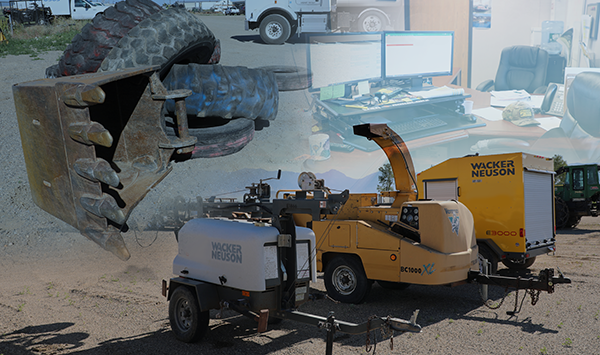
Hoarding, misplacement, theft and general lack of visibility are common challenges for all construction businesses. These issues result in cost overruns, project delays, and unplanned downtime. In fact, construction companies lose millions each year to stolen or lost small equipment.
Without a reliable equipment management system to monitor all your assets, contractors find themselves repeatedly replacing or over-renting and driving up expenses over time.
Luckily, there’s a solution for tracking these more diverse asset classes. In this guide, we will look at the critical role BLE (Bluetooth) beacons play in equipment management, the best use cases for BLE asset tracking, and the top solutions for construction businesses.
Key Takeaways
- BLE beacons transmit signals up to 300 feet (line-of-sight).
- Battery life lasts up to three years depending on environmental conditions.
- BLE beacons are ideal for tracking tools, attachments, and ancillary assets without engines
- BLE beacon location data is secured and only accessible to users within your organization.
- TennaINTEL devices can autonomously capture location updates for up to 128 BLE beacons at once.
- BLE tracking integrates with broader asset management platforms for unified fleet visibility.
Why Tracking All Assets Matters in Construction
The construction industry faces significant challenges due to misplaced or stolen equipment. According to an analysis of 2025 FBI crime data, more than $336 million in heavy construction and industrial equipment and $476 million in hand and power tools were reported stolen during the year.
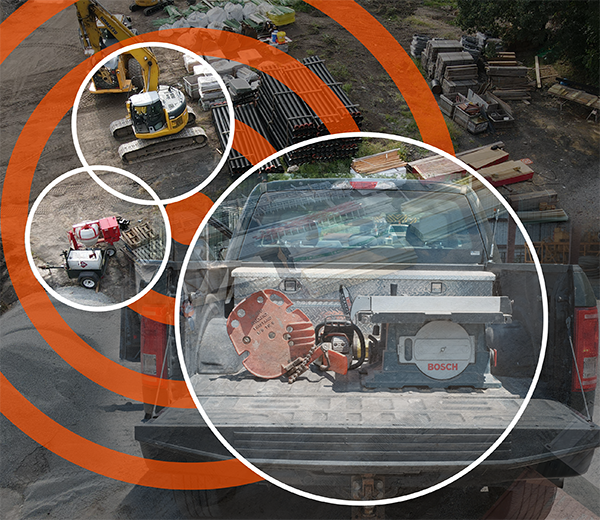
With the rising cost of equipment and materials due to supply chain issues and tariffs, and the frequent loss or misplacement of high-impact items as well as critical machine parts and attachments, the industry faces a serious challenge: keeping tabs on critical but easily overlooked support assets to avoid unnecessary repurchases.
Common challenges construction businesses face with hard-to-track tools and support inventory that traditionally fall through the cracks:
- Loss and Theft: Small tools are particularly vulnerable to being misplaced or stolen due to their size and portability.
- Inefficient Utilization: Without proper tracking, assets may be underutilized, hoarded, or lost entirely, leading to unnecessary purchases or rentals. This is especially true with bulky and hard-to-move assets such as trench shoring boxes and concrete forms.
- Administrative Burden: Manually tracking equipment can be time-consuming and prone to errors, diverting valuable resources from core construction activities.
Implementing tracking solutions can mitigate these losses by maintaining location visibility, improving accountability, streamlining scheduling and dispatching, and enhancing overall site efficiency.
Types of Asset Tracking Devices
Various technologies are employed to track construction assets, including:

QR Codes: Cost-effective and easy to implement but relies on manual scanning

Bluetooth Low Energy (BLE) Beacons: Proximity-based tracking using Bluetooth technology to see location detected by compatible Bluetooth readers, and a great, reliable, cost-effective solution for miscellaneous assets of all shapes and sizes without engines.
GPS Trackers: Uses cellular data to locate and track assets in real time and often plug into onboard diagnostic ports for usage, hours, maintenance and other data collection. GPS is not typically the most cost-effective method for monitoring smaller, miscellaneous assets.
BLE Beacons vs. GPS Trackers vs. QR Codes
| Feature | BLE Beacons | GPS Trackers | QR Codes |
|---|---|---|---|
| Cost | Low | High | Very Low |
| Range | Up to 300 ft (line-of-sight) | Global (cellular coverage) | Requires direct scan |
| Battery Life | Up to three years | Varies; often requires charging or asset power | N/A |
| Best Use Cases | Operational support assets, equipment attachments, ancillary assets, tools and spare parts | Heavy and mid-sized equipment, vehicles, high-value assets | Low-value items, inventory counts |
| Limitations | Requires nearby receiver or mobile device | Not ideal for small or ancillary assets | Manual scanning required, no real-time tracking |
What are BLE Beacons?
BLE beacons are small, wireless transmitters that use Bluetooth Low Energy technology to broadcast signals to nearby devices. These beacons have gained popularity in various industries, including construction, for their ability to facilitate efficient asset tracking and management in a low-cost manner.
BLE means Bluetooth Low Energy, which is a wireless communication method that serves short-range data exchange and uses very little power.
You are likely very familiar with how BLE technology works in your personal life, whether connecting to a speaker system or AirPods, or connecting your computer with a wireless mouse and keyboard. This same application, through IoT technology, can connect a construction asset with a BLE tracker to a broader construction asset management platform. (More on that below.)
BLE beacons send out signals that compatible devices can detect, which typically includes smartphones and special receivers. These signals help monitor asset location within a certain range.
BLE beacons provide a flexible solution to track more diverse asset classes.
How Does BLE Asset Tracking Work?
BLE asset tracking works by attaching a small Bluetooth beacon to a physical asset, such as an excavator bucket, tool, or piece of support equipment. The beacon regularly broadcasts a signal that compatible nearby readers can detect.
When a reader picks up that signal, it can send the detection and its location information to an asset management platform. This creates a record of where the asset was detected, giving contractors a way to monitor equipment without manually scanning each item.
Unlike GPS trackers, BLE beacons don’t independently determine their geographic location. Their location visibility depends on nearby receivers or mobile devices detecting their signals.
How BLE Beacons Are Used in Construction
In construction, BLE beacons are affixed to attachments, material inventory, tools and miscellaneous assets, enabling managers to monitor their location and movement within the job site. BLE beacons send signals, called pings, that nearby receivers or mobile devices can pick up.
Tenna’s BLE beacons, for example, transmit signals up to 300 feet, in line-of-sight. These regular heartbeats are picked up by Tenna’s Mobile App for iOS and Android or by the TennaINTEL Equipment Tracker, seamlessly capturing asset location data and feeding it directly into the Tenna platform.
TennaINTEL devices are designed to read TennaBLE beacons up to 300 feet in line-of-sight. The TennaINTEL P1 (Plug-In) reports GPS location every two minutes when the engine is running and once every 23 hours when the engine is off, while the TennaINTEL S1 (Solar) reports every 23 hours. Both devices support store-and-forward reporting, retaining collected data when cellular coverage is unavailable and transmitting it once connectivity returns.
BLE beacons consume minimal power, often lasting several years without replacement, and are engineered to stand tough against construction environmental factors. This longevity makes them a cost-effective solution for continuous asset tracking in demanding construction environments and in high, aggressive use scenarios.
BLE Beacons vs. Other Equipment Tracking Solutions
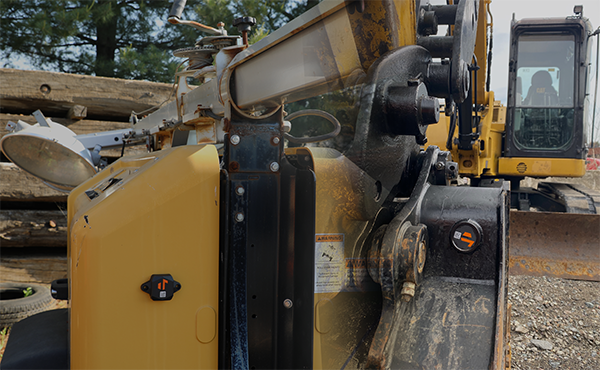
BLE beacons offer a unique combination of affordability, efficiency and versatility. So, what are the ideal use cases?
BLE beacons are particularly suited for:
- Indoor and Outdoor Tracking: Effective in diverse environments where GPS may falter
- Tool and Small Asset Management: Use on hand tools, non-powered assets, surveying tools, lights, instruments and more
- Heavy Equipment Attachment Tracking: Use on buckets, grapples, forks, blades and more
- Construction Material Inventory Tracking: Use on trench boxes, concrete forms, and other structural support assets.
Benefits of Using BLE Beacons
Implementing BLE beacons for tracking offers numerous advantages:
- Increased Equipment Visibility on Job Sites: Tracking ensures that all tools and equipment are accounted for, reducing the likelihood of misplacement.
- Enhanced Productivity and Efficiency: Workers spend less time searching for assets they need to use or deploy, allowing more focus on critical tasks.
- Minimized Expenses and Waste: Digitizing the usage and movement of these assets also supports job costing and reduces unnecessary expenses.
- Reduced Loss and Theft: Continuous monitoring deters theft and aids in the swift recovery of lost or stolen items.
Key Features to Look for in BLE Equipment Tracking Devices
When selecting BLE beacons for construction applications, consider the following features:
Durability and Weather Resistance: BLE devices should be able to withstand harsh construction environments in order to fulfill the construction use case. This includes exposure to dust, moisture, extreme temperatures and impact. Tenna’s SP2, for example, is encased in steel and Ultem™ and designed to be welded directly onto assets. With dimensions of 2.935″ outer diameter x 1.0625″ height, it meets IP68 and IP69K durability testing, providing protection against dirt, water immersion, and high-pressure, high-temperature washdowns.
Battery Life and Signal Range: Opt for beacons with long battery life and sufficient range to cover your job site effectively. For example, Tenna’s BLE beacons last up to three years, depending on environmental conditions and transmit signals up to 300 feet (line-of-sight), depending on potential obstacles and environmental conditions.
Compatibility with Asset Management Systems: Ensure compatibility with existing asset management platforms for seamless data integration and analysis. Tenna’s BLE beacons enable contractors to consolidate asset tracking and data into a single system. Tenna’s mixed-fleet tracking solution includes multiple hardware options beyond BLE beacons (such as TennaINTEL P1 and S1, TennaMINI 2.0, TennaFLEET II, TennaCANbus, and TennaQR/ActionQR) allowing contractors to track all asset classes from a single platform.
Reader Coverage and Location Reporting: BLE tracking depends on compatible readers detecting beacon signals. Consider how readers are distributed across jobsites, yards, and equipment fleets, how frequently detections are reported, and how that information is displayed in your asset management software.
Tenna’s BLE Asset Tracking Solutions
Tenna brings BLE asset tracking into the same platform contractors use to manage their heavy equipment, vehicles, tools, and support assets. Instead of maintaining separate inventories for GPS-tracked machines and smaller Bluetooth-tagged equipment, teams can manage their mixed fleet from one system.
Designed specifically for real-world construction applications, Tenna’s BLE Beacons provide the tracking technology for assets that don’t need individual GPS devices, while compatible TennaINTEL trackers and the Tenna mobile app detect nearby beacon signals to update asset location records.
Tenna offers several BLE beacon options designed for different construction applications:
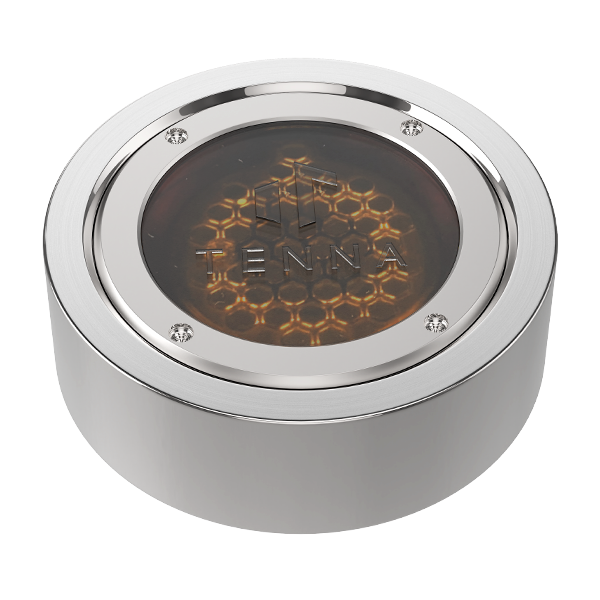
TennaBLE SP2 – ideal for larger, hard-to-track operational support assets, such as road plates, trench shoring, concrete forms, equipment attachments and more
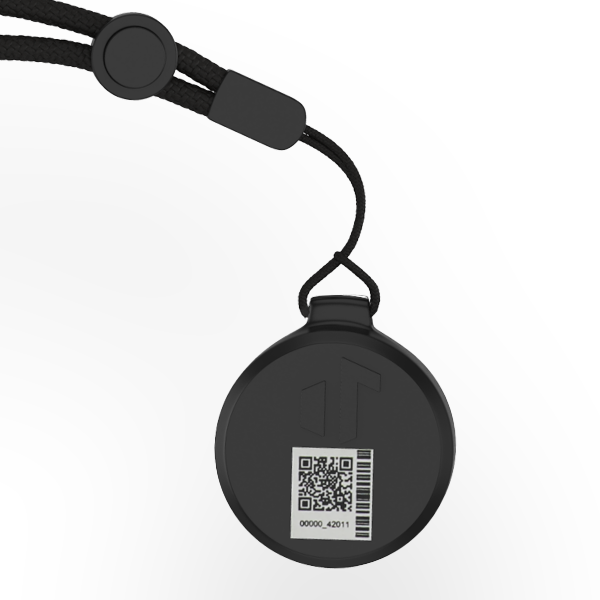
TennaBLE RT1 – Tenna’s smallest BLE offering at just 1.71 inches in diameter, ideal for small tools and devices, non-powered assets, surveying tools, lights, instruments and more
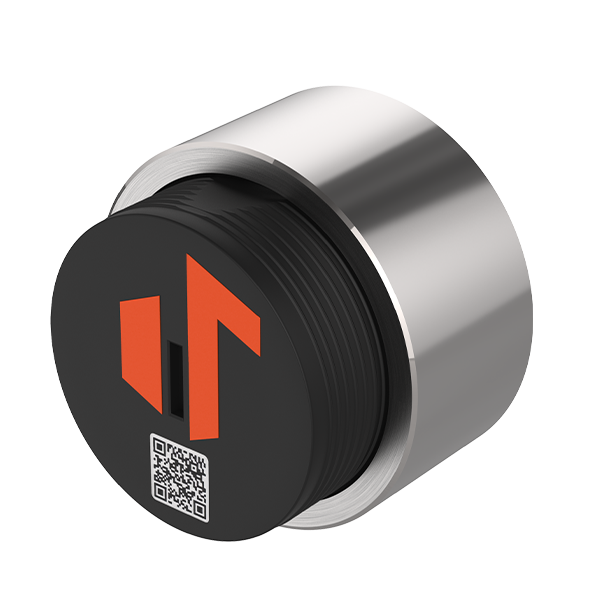
TennaBLE Beacon Steel Puck – ideal for equipment attachments such as buckets, trench boxes, boom sections, and spare parts
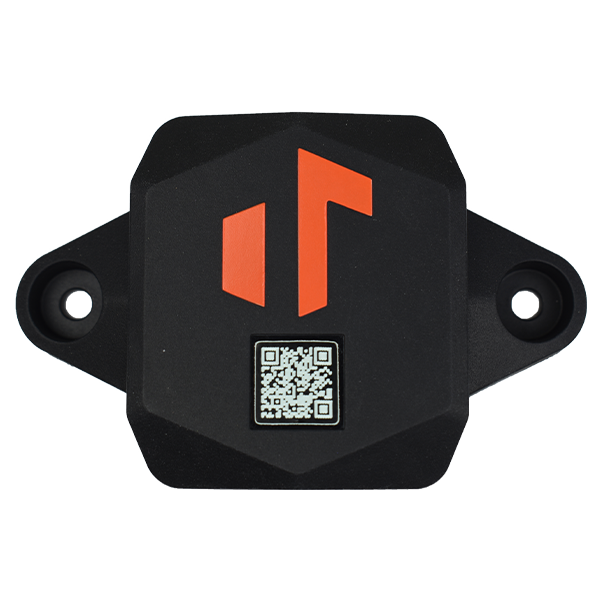
TennaBLE Beacon Ruggedized – ideal for spare parts, power tools, light towers, and more
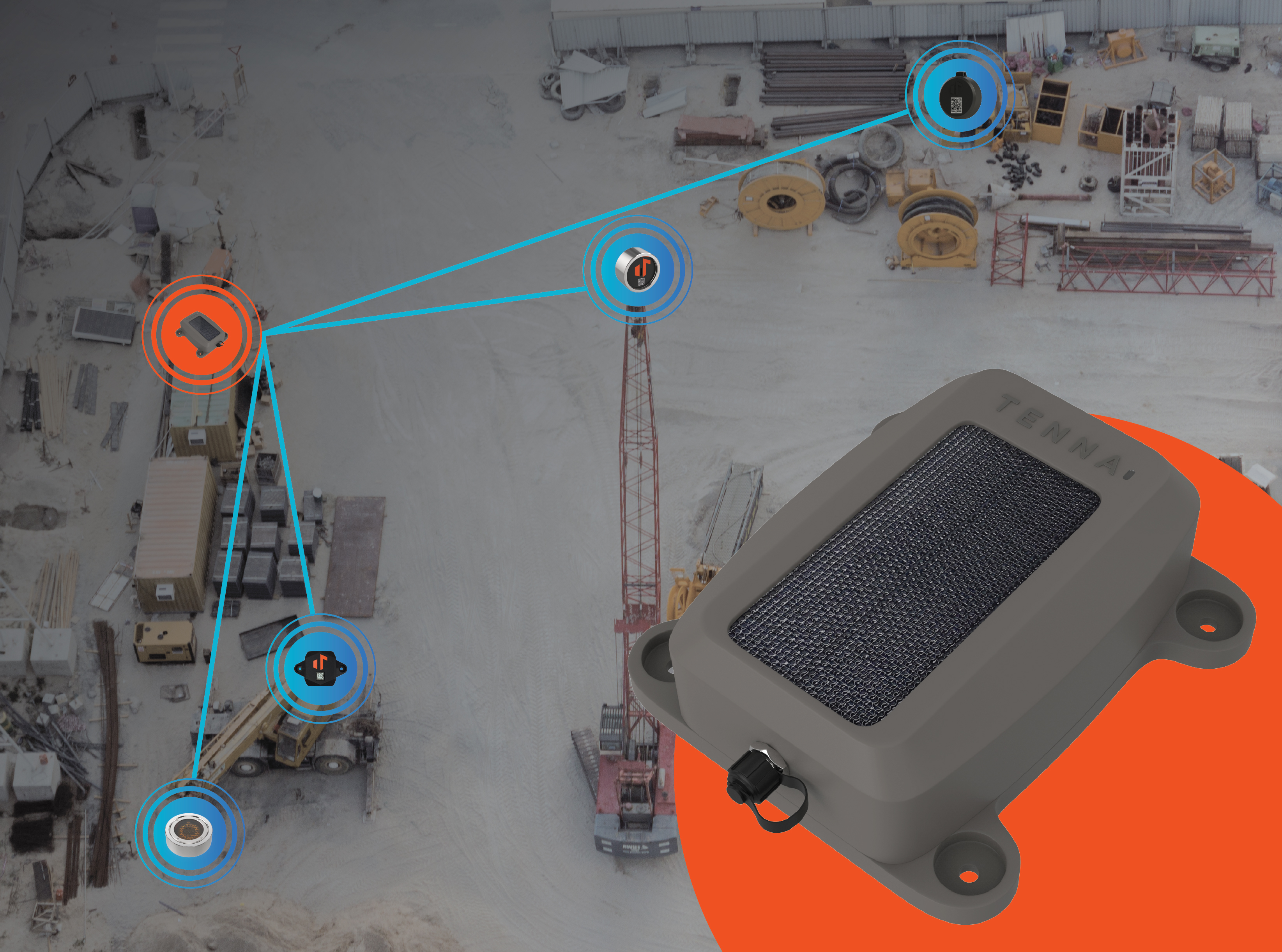
When paired with TennaINTEL, which is used in mid-sized, engine-powered equipment, tracking goes a step further by enabling autonomous location updates for up to 128 beacons at once. This powerful capability allows contractors to monitor multiple small assets alongside a piece of heavy equipment without requiring manual scans or data entry.
Take Control of Your Asset Tracking with BLE Beacons
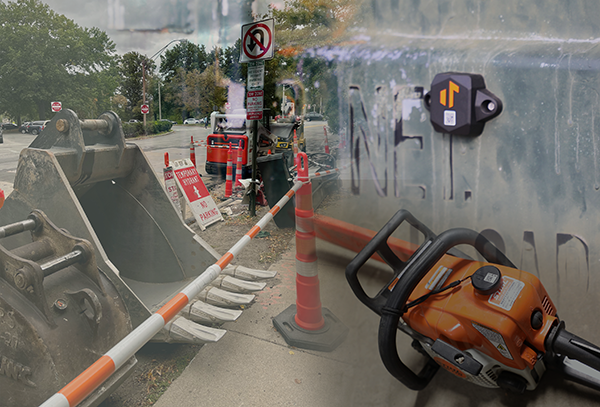
While easily overlooked supporting assets may not cost as much as heavy machinery, they are just as important for productivity and profit. Losing track of these assets, or not maximizing their use, leads to unnecessary replacements, time-consuming searches, and poor job costing. BLE beacons can help solve these problems.
By leveraging BLE beacon technology, contractors can gain real-time visibility and control over more diverse asset classes. Improved inventory management translates directly into more accurate job costing, better budget control, and ultimately, improved project margins. Every asset accounted for is time and money saved on replacements, rentals, and wasted labor hours.