Asset Financials:
Equipment Job Costing and Billing Powered by Telematics

Finally Know What Your Equipment Is Really Costing Each Job
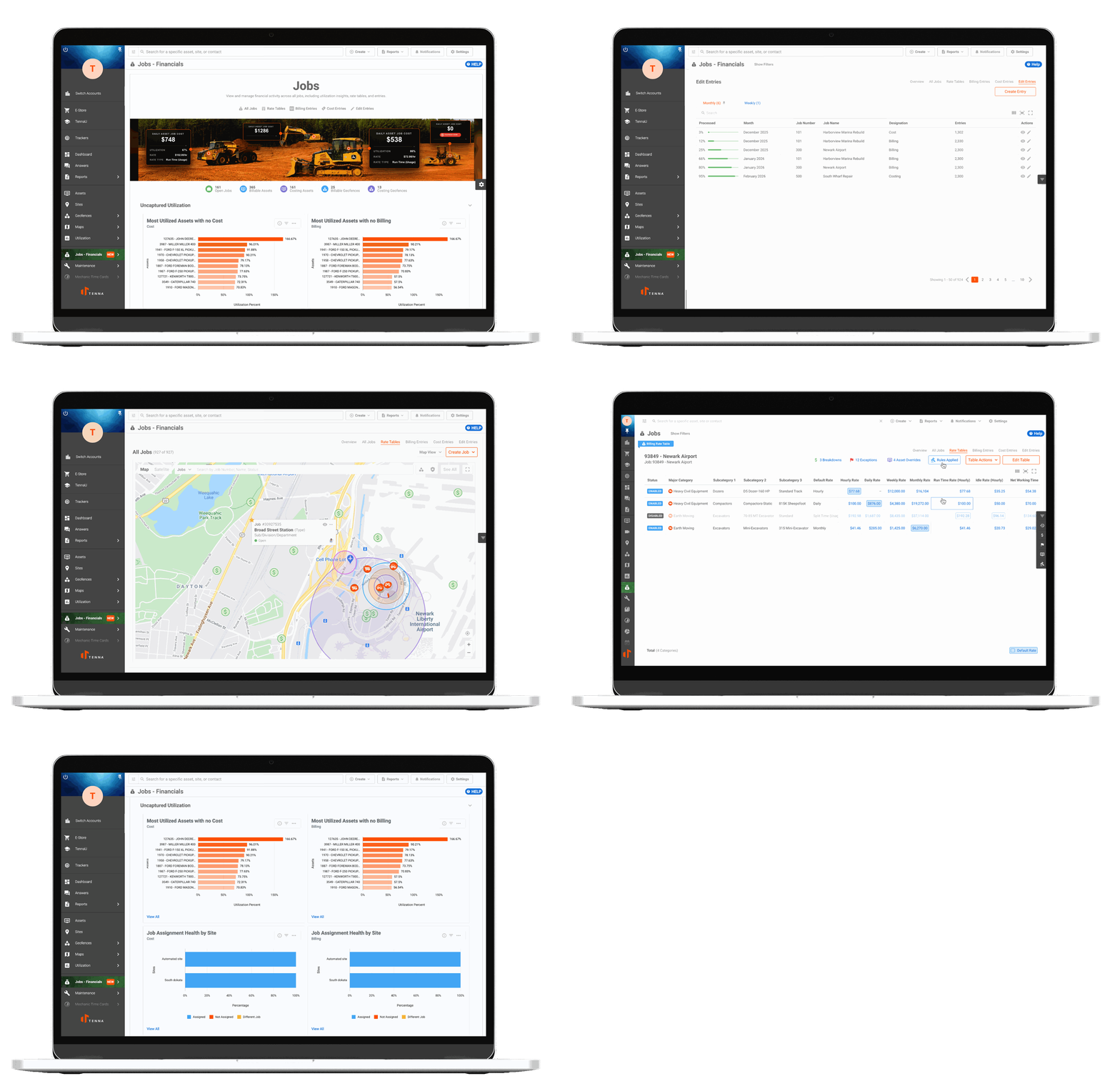
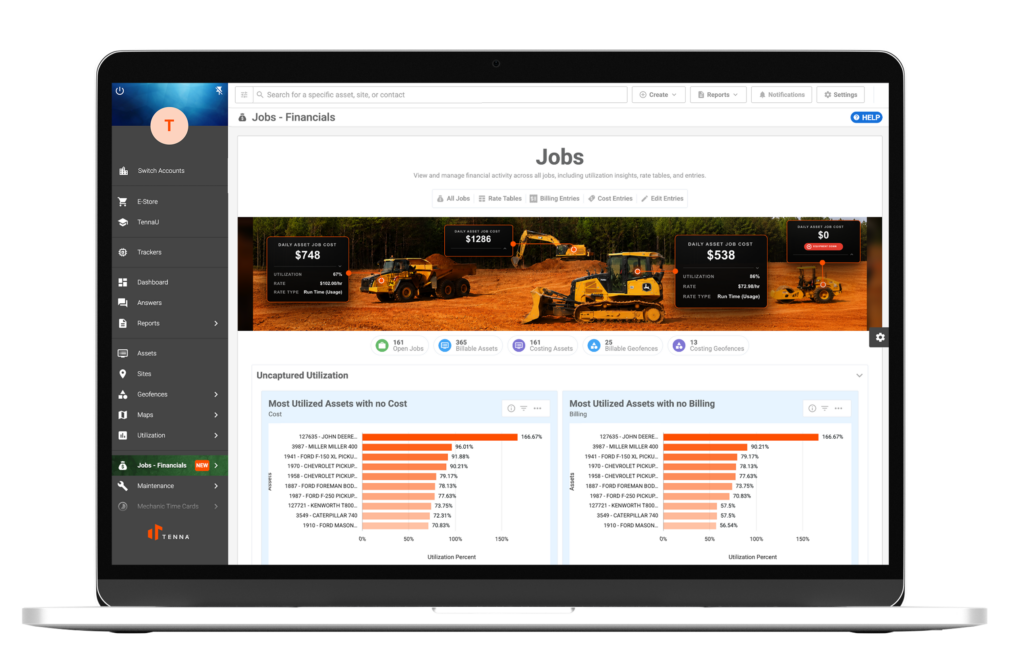
Asset Financials is the construction industry’s first telematics-powered equipment economics engine enabling automated equipment job costing, internal billing and real-time asset P&L. Automatically calculate what each of your assets costs or earns on every job using live machine data.
- Automated equipment job costing tied to actual asset activity
- Real-time asset P&L by machine, by job, by period
- Internal, configurable billing rules that apply consistently, every time
- ERP-ready output that feeds your accounting system
Benefits of Asset Financials
Unlock Hidden Profits
Discover the true P&L of every asset in your fleet, not just your highest-profile machines.
Eliminate Missed Billing
Ensure equipment charges flow to the right jobs, every time, without manual follow-up.
Reduce Reconciliation Work
Replace spreadsheets and month-end scrambles with automated, real-time cost allocation and digital paper trail.
Resolve Disputes Faster
When the shop, the field, and finance all work from the same machine data, the argument ends.
Improve Construction Job Costing
Job cost history built on telematics data to improve bid accuracy
Right-Size Your Fleet
Use asset-level profitability data to make smarter buy, rent, redeploy, and retire decisions.
Where Traditional Fleet Tools Fall Short
Disconnected
Financial Data
Equipment usage lives in one system. Construction job costing lives in another. No bridge exists between them.
Manual Cost
Allocation
Estimated or
Incomplete Inputs
Operator-reported hours and assumed utilization rates lead to inaccurate costing. Most contractors recover only a fraction of their true equipment costs because of this.
Delayed
Visibility
By the time costs are calculated, the job is already over. There’s no opportunity to adjust deployment, billing, or resource decisions.
No True
Equipment P&L
You can see what a machine costs to operate. But can you say with confidence whether it’s profitable?
From Machine Data to Financial Clarity
Asset Financials connects the operational data already flowing through Tenna to your financial workflows, so equipment costs flow to the right jobs without anyone having to chase them down.
1. Capture Real-Time Equipment Activity
Asset Financials collects live telematics data from every asset in your fleet: engine hours, location, movement, utilization status, and operational state. This data comes directly from the machine.
2. Automatically Assign Equipment to Jobs
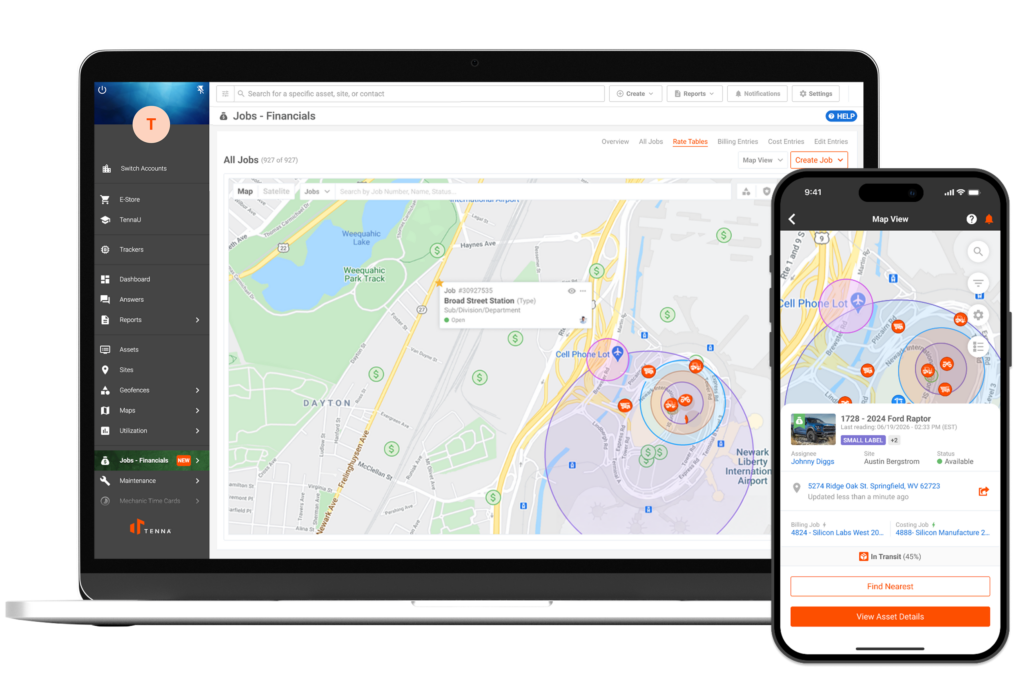
Geofencing links equipment activity to specific jobs based on where assets are working. When a machine enters a job’s geofence, the system registers the assignment and begins tracking costs. When it moves to a new job, the previous assignment closes and the new one opens, with no manual entry required.
3. Apply Smart Rate Logic
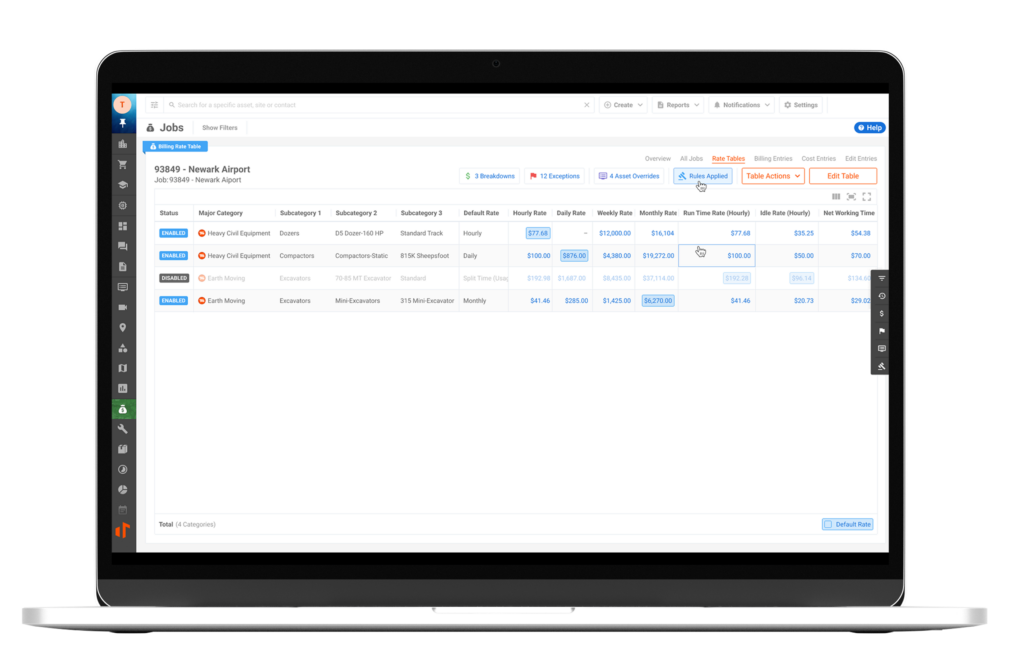
Define billing, costing and charging rules based on what actually matters to your organization: asset class, utilization status, job type, department, or any combination. Asset Financials supports account-wide rate templates and both job-specific and asset-specific rate overrides with unique contract or billing requirements.
4. Generate Accurate Cost Allocations
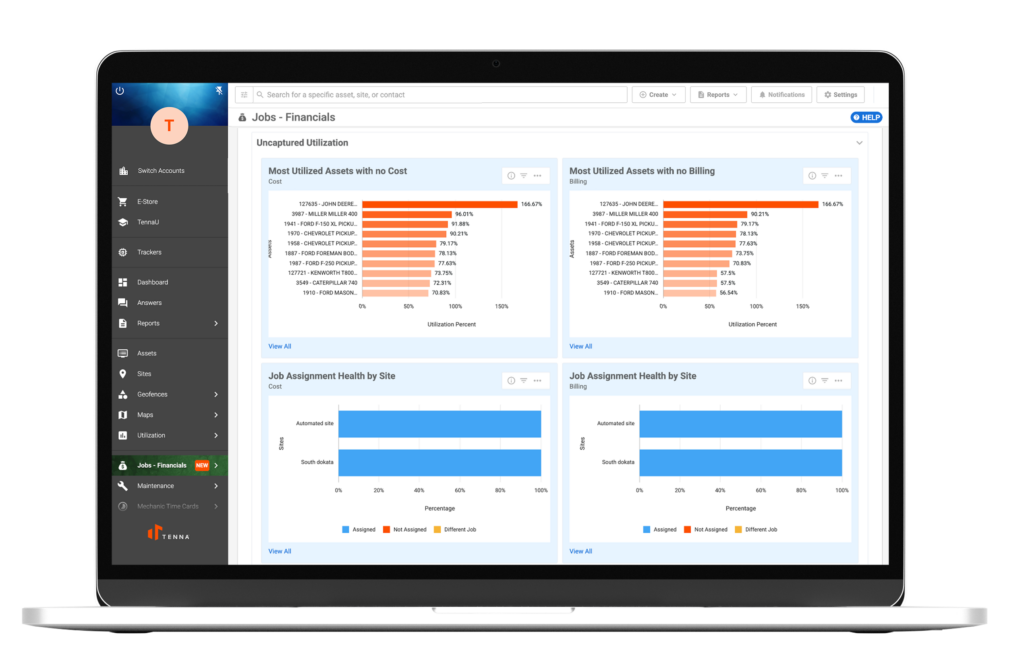
Costs are automatically calculated and assigned to the right job and cost code based on actual machine activity. Asset Financials rolls up every cost layer to give you a complete picture of what each asset costs each job, not just the operating rate.
5. Sync with Your Financial Systems
It arrives on the job
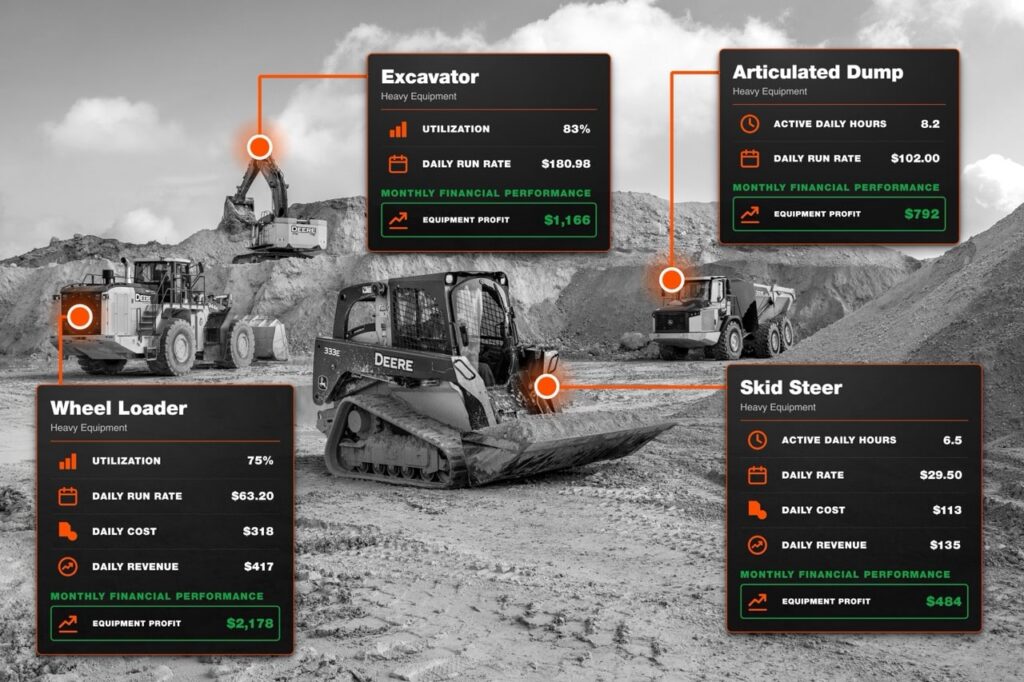
Tenna knows when the excavator enters Job Site A. Real-time hours, location and status help capture costs against the job without manual entry.
Every hour, costed correctly
Tenna's rate tables can separate idle time from productive working time or support job level overrides, so every hour is accurately charged to the correct Job.
Cost updates applied in real time
If the unit has an unplanned down event, rate exceptions can be applied to protect the job from being over charged.
When the unit moves, the cost follows
When it moves to Job Site B, its assignment on Job A closes with a final total and the new one opens automatically.
Accurate job costing for each asset
Usage-based rates, time-based rates and exceptions, and more. Every cost lands on the right job automatically, then syncs to the ERP as defensible data.
Built for How Construction Finance Actually Works
A Rate Engine Built for Real-World Complexity
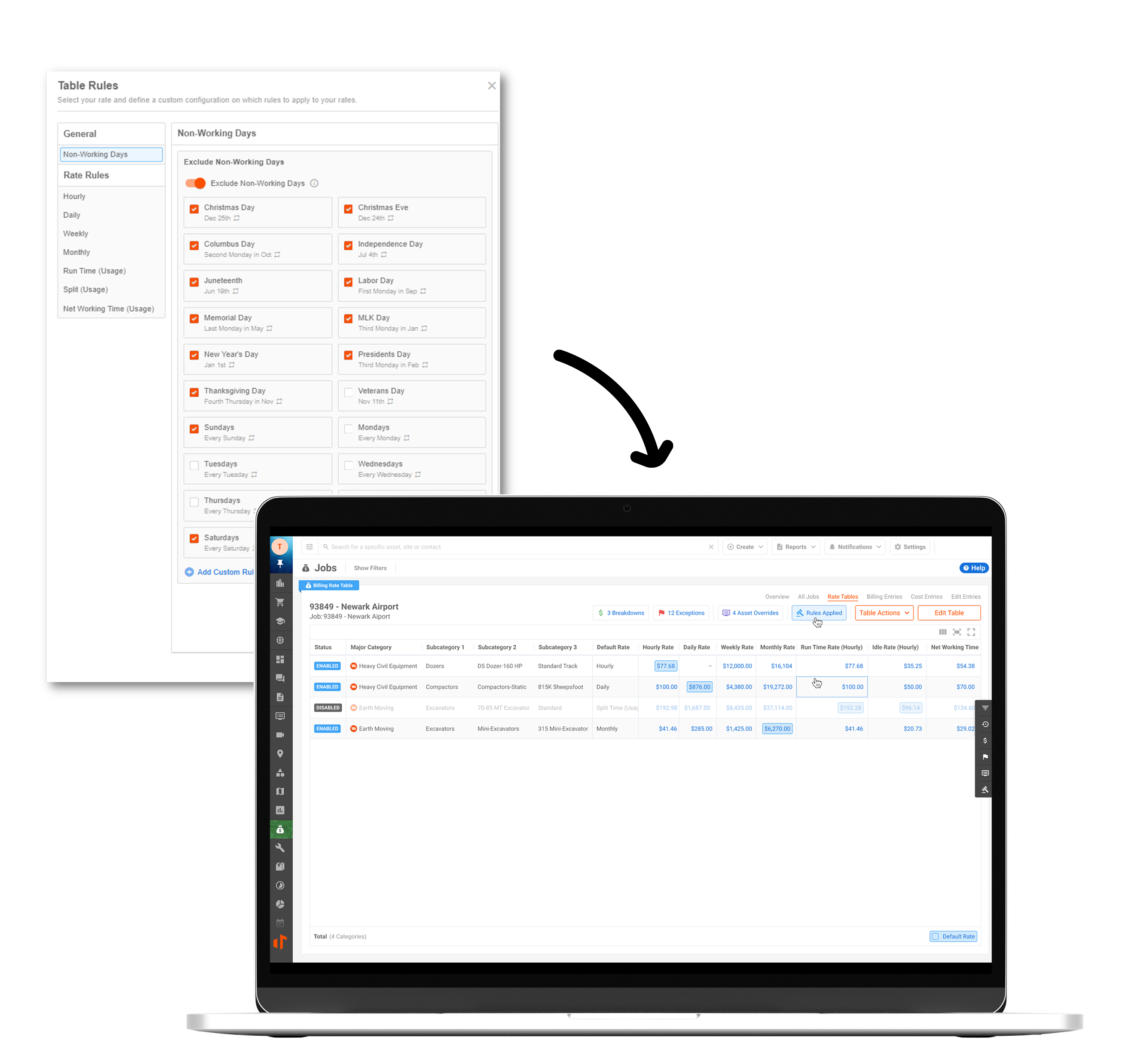
No two contractors bill the same way. Asset Financials doesn’t impose a standardized model. It’s designed to be flexible to support the rate logic you already use, however you’ve structured it. Set account-wide templates as the organizational baseline, then layer in job-specific rates where individual projects require different treatment.
- Account-wide rate templates: Establish baseline rate logic across the fleet by asset class, category, or type, applied consistently to every job.
- Job-specific rate overrides: Configure project-level rates that layer on top of account defaults for contracts with unique requirements, without touching the organizational baseline.
- Working vs. idle: Rates respond to actual utilization status. A machine running 12 hours is costed differently than one on standby, down, in-transit, etc.
- Status-based rules: Trigger different rates or suspend billing based on whether an asset is in transit, down for maintenance, or awaiting deployment.
- Production-based support: Even when customer billing is tied to output rather than time, Asset Financials ensures internal cost attribution exists, so equipment costs are never lost.
True Asset P&L: Per Machine, Per Job, Per Period
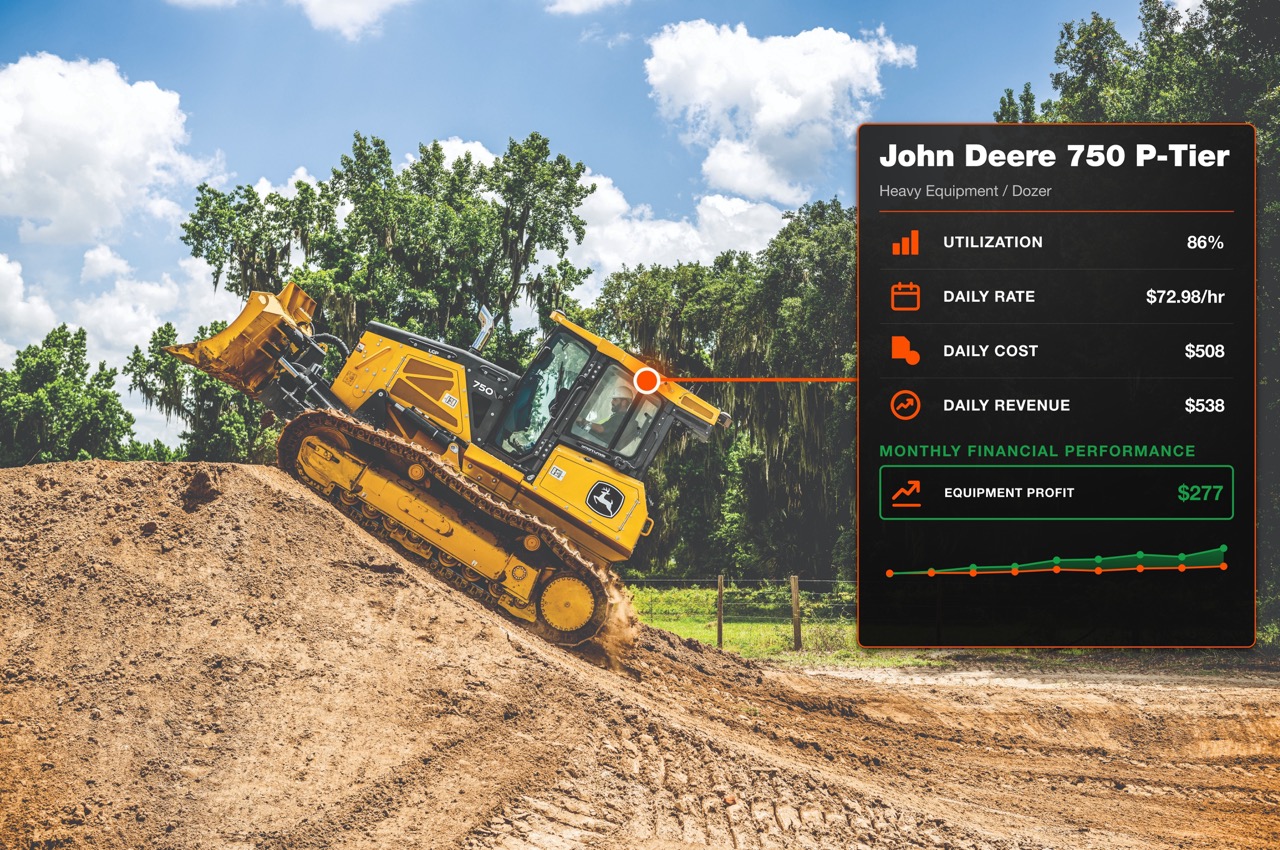
Most contractors know what equipment costs at a fleet level. Very few know what a specific machine made or lost on a specific job. Asset Financials changes that. By rolling up every cost layer into a single per-asset view, you can finally answer the question at the center of every fleet decision: is this asset earning its keep?
- Total cost of ownership per asset, updated continuously as operational data flows in
- Revenue or internal billing generated per asset across jobs and time periods
- Fleet-level benchmarks by equipment class, so you can compare asset performance against your own organization’s standards
- Buy, rent, redeploy, and retire decisions grounded in real P&L data
Asset Financials Is the ERP’s New Best Friend
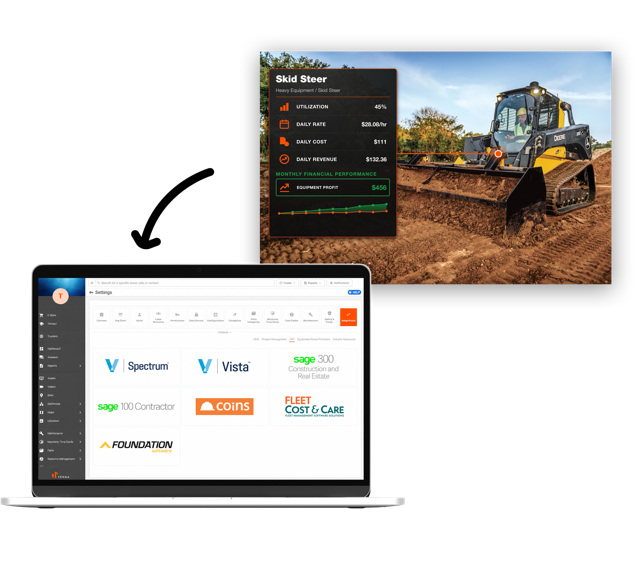
Asset Financials doesn’t compete with your accounting system. It feeds it. ERPs are designed to be the system of record for construction financials. Asset Financials is designed to be the system of truth for equipment operations, delivering the accurate, real-time operational context your ERP has always needed to produce defensible job cost reports.
- Equipment hours from the machine, not a timecard
- Job assignments driven by geofence logic, not manual entry
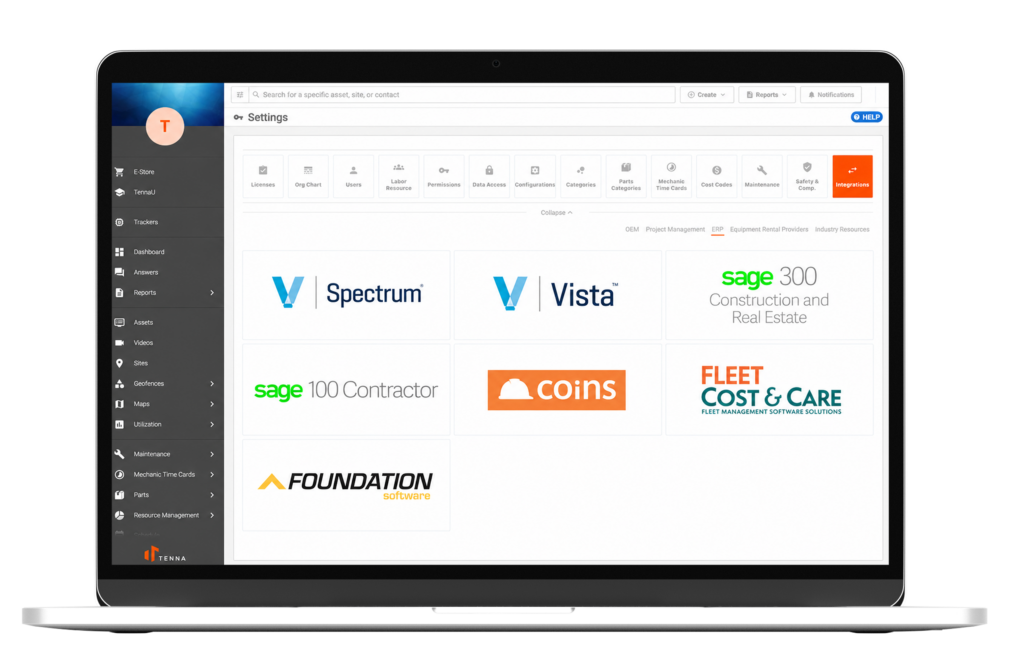
- Clean, structured data ready to sync with your existing accounting workflow
Where the Shop, the Field, and Finance Finally Agree
The billing dispute that plays out every month among most contractors has a root cause: three teams working from three different versions of the same reality. When equipment activity automatically drives construction equipment job costing, everyone works from the same machine data.
Shop
Billing is grounded in machine data.
Field
Cost allocation is tied to actual activity and trusted.
Finance
Real-time, defensible numbers that don’t require reconciliation to produce.
How Contractors Use Asset Financials
Internal Job Costing
Automatically attribute equipment costs to specific jobs, cost codes, and periods using live machine data, without manual timecards or end-of-month reconciliation. Get defensible numbers your project team and finance department can both stand behind.
Internal Billing Between Shop and Field
Whether you call it internal billing, charging, shop revenue, or cost allocation, Asset Financials applies your rate logic consistently across every job. Shop and project teams work from the same data source, eliminating disputes before they start.
Total Cost of Ownership by Asset
Roll up work orders, parts, mechanic labor, downtime, and utilization data into a comprehensive view of what each machine has cost the organization over its lifetime. Know exactly where each asset stands before making lifecycle decisions.
Fleet Right-Sizing
Use asset-level P&L data to identify which machines are consistently underperforming. Make buy, rent, redeploy, and retire decisions with real financial context, not intuition.
Billing Documentation for Clients
When clients request documentation of equipment usage, pull a report showing every asset on-site, hours logged, and status backed by telematics data and camera footage. Disputes resolve faster when the data is objective.
Production-Based and Non-Hourly Contracts
If customer billing is tied to output or lump-sum contracts, internal equipment cost attribution still matters. Asset Financials ensures costs are captured and assigned regardless of how the job is structured externally.
Built for the Construction Teams Who Need It Most
FINANCE
Where the numbers land
CFO, Finance
Leadership, Controllers
Real-time, defensible equipment P&L that feeds your ERP accurately and holds up under audit. Automated cost allocation that eliminates month-end reconciliation and gives you job cost data you can trust.
OPERATIONS
Where margin lives or dies
COO, & VP of Operations, Project Executives
Fleet-level visibility into equipment profitability, so operational decisions are backed by financial data. Accurate job cost history that improves estimating confidence and margins on future bids.
EQUIPMENT DIVISION
Where the charge starts
Equipment
Managers
Credible data to support lifecycle decisions and present finance exactly what the fleet is costing.
Learn more about what Asset Financials can do for your fleet and your bottom line.
Frequently Asked Questions
Will Asset Financials replace my ERP?
Does it work if we don’t separately invoice customers for equipment?
Yes. Asset Financials is primarily focused on internal billing (charging) and construction equipment job costing, not customer invoicing. Even if equipment isn’t billed directly to a client, it still costs your organization real money. Asset Financials ensures owned equipment costs are captured and attributed to the right job regardless of how you structure external billing.
Our billing rules are complex. Can the system handle them?
What if an asset is working across multiple jobs or has a partial shift?
We already have telematics. What does Asset Financials add?
Telematics tells you what your equipment is doing. Asset Financials tells you what it’s costing and what it’s earning. It takes the operational data you’re already capturing and connects it to your financial workflows, so it actually drives construction job costing and internal billing decisions.
You May Also Like
- How to Track Construction Job Profitability Including Owned Equipment Costs
- Tying Real-Time Equipment Data to Project Financial Performance
- How to Integrate and Automate Telematics Data into Construction Billing
- Mobilization & Transport Costs for Construction Job Costing
- How Equipment Utilization Data Informs Purchase vs. Lease Decisions
- How Construction Equipment Data Fuels Profitability
Know What Your Equipment Is Really Worth
Book a Demo