Updated August 7, 2026
Construction has one of the highest workplace fatality rates of any industry, and most safety programs still only catch problems after they’ve already happened.
A missed inspection. A maintenance issue nobody flagged in time. A near miss that never got logged. By the time paperwork catches up to any of it, the moment to actually prevent something has already passed.
AI is changing that timeline. AI in construction safety management uses technologies like predictive analytics and machine learning to catch hazards, prevent accidents, and keep jobsites compliant. Traditional safety protocols work differently, relying on manual monitoring and paper trails, which means problems tend to surface after the fact instead of before. With AI, you can flip that order to catch problems while there’s still time to act instead of after the damage is already done.
If you’re interested in bringing that shift into your own operation, this is the perfect place to start. Let’s look at the different types of AI shaping construction safety, how each one shows up in practice, and what matters most when it’s time to decide what to adopt.
Key Takeaways
- AI in construction safety is the application of predictive, prescriptive, and generative technologies to catch hazards earlier and reduce how much a safety program depends on manual monitoring.
- Predictive AI looks at historical data, like incident reports and equipment records, to flag risks before they turn into accidents.
- AI-powered cameras and wearables catch hazards as they happen, including risky driving, blind-spot collisions, and unsafe worksite conditions.
- Automated compliance tools cut down on manual paperwork by tracking certifications, flagging missing documentation, and generating safety reports on their own.
- Construction-specific AI tools consistently outperform generic, industry-agnostic software because they’re built around how jobsites actually operate.
Types of AI in Construction
Not all AI works the same way, and construction safety draws on a few distinct types, each suited to a different kind of problem your operation could face:
| AI Type | What It Does | Construction Safety Use |
|---|---|---|
| Predictive AI | Analyzes historical data to forecast risks | Equipment failure prediction, incident pattern analysis, weather-related risk forecasting |
| Prescriptive AI | Recommends specific actions to improve outcomes | Safety protocol adjustments, resource allocation for high-risk areas, compliance recommendations |
| Generative AI | Creates new content or scenarios from learned patterns | Training simulations, risk assessment models, safety documentation |
Combining more than one type is often where the real value shows up. And that’s because predicting a risk, recommending a fix, and training a crew on it are three different problems that call for three different tools.
Why Construction-Specific AI Outperforms Generic Tools
Industry-built AI consistently beats generic, one-size-fits-all software because it’s designed around the actual conditions of a jobsite instead of a generalized use case. That pattern holds up outside construction too: according to Aptean’s 2026 Artificial Intelligence Research, businesses using industry-specific AI reported stronger performance than those relying on general-purpose AI platforms.
The same trend applies to most major waves of technology. Once a product tries to serve every industry at once, it loses the depth that made it useful in the first place, and it often doesn’t integrate cleanly with the systems a specific industry already relies on. That mismatch creates new data silos rather than closing existing ones. Contractors who invest in construction-built AI tend to see the most out of that investment, simply because the tool was designed around their actual constraints from the start.
How AI in Construction Safety Can Help Your Operation
Predictive Analytics for Risk Mitigation
Predictive analytics is one of the most impactful uses of AI in construction safety, since it catches risk patterns before they turn into incidents.
The technology works by scanning historical data, including incident reports, injury logs, and environmental conditions, to surface patterns a person reviewing manually would likely miss. With that insight, construction managers can step in before a risk turns into an accident instead of after.
Examples of Construction Predictive Analytics in Action
- Predictive models can flag equipment nearing failure based on its maintenance history.
- A spike in incidents can get traced back to a specific weather condition.
- Past project costs and expenses can also feed into more realistic budgets and bids.
Armed with those patterns, contractors can adjust schedules, update safety rules, or route additional PPE to the areas that need it most.
Real-Time Data Sharpens the Picture
Predictive analytics are great, but history only gets you so far. This tool gets a lot more useful once it starts factoring in what’s actually happening on site right now, not just what already happened.
IoT sensors are what make that possible, feeding in live conditions as they change instead of waiting for a report to catch up. Scaffolding sensors can flag when a structure exceeds its weight limit. Weather monitoring can warn a crew about high winds or heavy rain before conditions turn dangerous.
Engine-powered asset trackers can even flag usage patterns that call for maintenance before a breakdown happens. Tenna’s CAN bus tracker is one example of this. It captures engine and diagnostic data, including PTO and idle time, and feeds it into the Tenna platform alongside camera and telematics data. That combination gives predictive maintenance and safety models far more to work with than historical records alone.
Real-Time Hazard Detection On and Off Jobsites
Real-time hazard detection is another example of AI in construction safety changing the game. Whether it’s a camera on the dash, a drone over the site, or a wearable on a worker, connected sensors give teams a faster response than any manual process could.
AI-Powered Dash Cameras
AI dash cameras go beyond basic video surveillance, using machine learning to analyze footage as it’s captured. They can spot risky driving behaviors like distracted driving, speeding, or sudden braking, monitor whether seat belts and phones are being used correctly, and reduce blind spots around heavy equipment that would otherwise put workers at risk.
Heavy equipment cameras solve a different problem: blind spots around large machinery like excavators and loaders. Mounted directly on the equipment, the best camera options process AI right on the camera to identify workers, pedestrians, and other vehicles in an operator’s blind spot, delivering real-time visual and audible alerts in the cab.
That matters more than it might seem: according to OSHA, roughly 75% of struck-by fatalities in construction involve heavy equipment.
Beyond preventing those accidents, this kind of 360-degree visibility also improves situational awareness for more precise operation and documents incidents on the jobsite itself
See the full benefits of AI dash cams for a deeper look at the ROI.
Drones for Jobsite Monitoring
AI-enabled drones extend hazard detection to angles a ground-level walkthrough would miss entirely.
DroneDeploy’s Safety AI product, for example, automatically scans thousands of jobsite images a week and flags visible OSHA risks for review. Drones can also survey a site for structural issues or unauthorized access, confirm that safety regulations are being followed, and capture aerial views that reveal problems standard inspections tend to overlook.
Paired with analytics platforms, that footage turns into detailed safety reports that point managers straight to what needs attention.
Wearable Technology for Construction Workers
Another emerging trend for AI in construction is wearable devices, such as the German Bionic Smart SafetyVest and the Bodytrak in-ear monitor. Depending on the product, AI sensors in these wearables can help improve real-time hazard detection in a few different ways:
- Monitoring workers’ vital signs to detect signs of fatigue or heat stress.
- Providing geofencing alerts if a worker enters a restricted or hazardous area.
- Triggering immediate warnings when you detect unsafe conditions, such as elevated noise levels or air quality issues.
Wearables contribute to a more proactive approach to safety, ensuring that individual workers receive immediate attention when risks arise.
Automated Construction Safety Compliance
Staying compliant with safety regulations is essential, but manual, paper-based tracking is slow and error-prone. AI removes much of that burden by automating the parts of compliance that used to eat up hours every week.
AI-driven compliance tools can track worker certifications and flag when training is about to lapse. They can also generate real-time safety performance reports and check construction plans against regulatory requirements using platforms like Document Crunch.
That same compliance data gets even more useful once it’s tied to how someone is actually performing day to day, not just whether their paperwork is current. Driver scorecards like Tenna’s tie AI camera events, telematics, inspection data, and compliance records together into a single, customizable performance score. That gives contractors a consistent way to coach drivers and operators instead of piecing the picture together by hand.
Faster Fleet Compliance Documentation
AI also changes what compliance documentation actually looks like day to day. Instead of digging through paper permits and inspection records, managers can pull up everything digitally in seconds.
These tools flag missing or outdated documentation automatically, generate consistent templates for incident reporting, and sync with cloud-based systems so records are easy to share and store. The time that used to go toward finding a document now goes toward acting on what it says.
Better Operator and Driver Training
On top of monitoring and paperwork, AI in construction safety is also changing training. Generative AI can build immersive simulations that let workers practice responding to real scenarios without any of the actual risk.
Platforms like Serious Labs use VR to simulate equipment malfunctions, emergency evacuations, and hands-on operator training. The goal is to give workers real repetition before they ever face the situation on site. On top of that, AI can assess how each worker performs in training and adjust future sessions to target where they actually need the practice.
Where AI in Construction Safety Adoption Is Headed
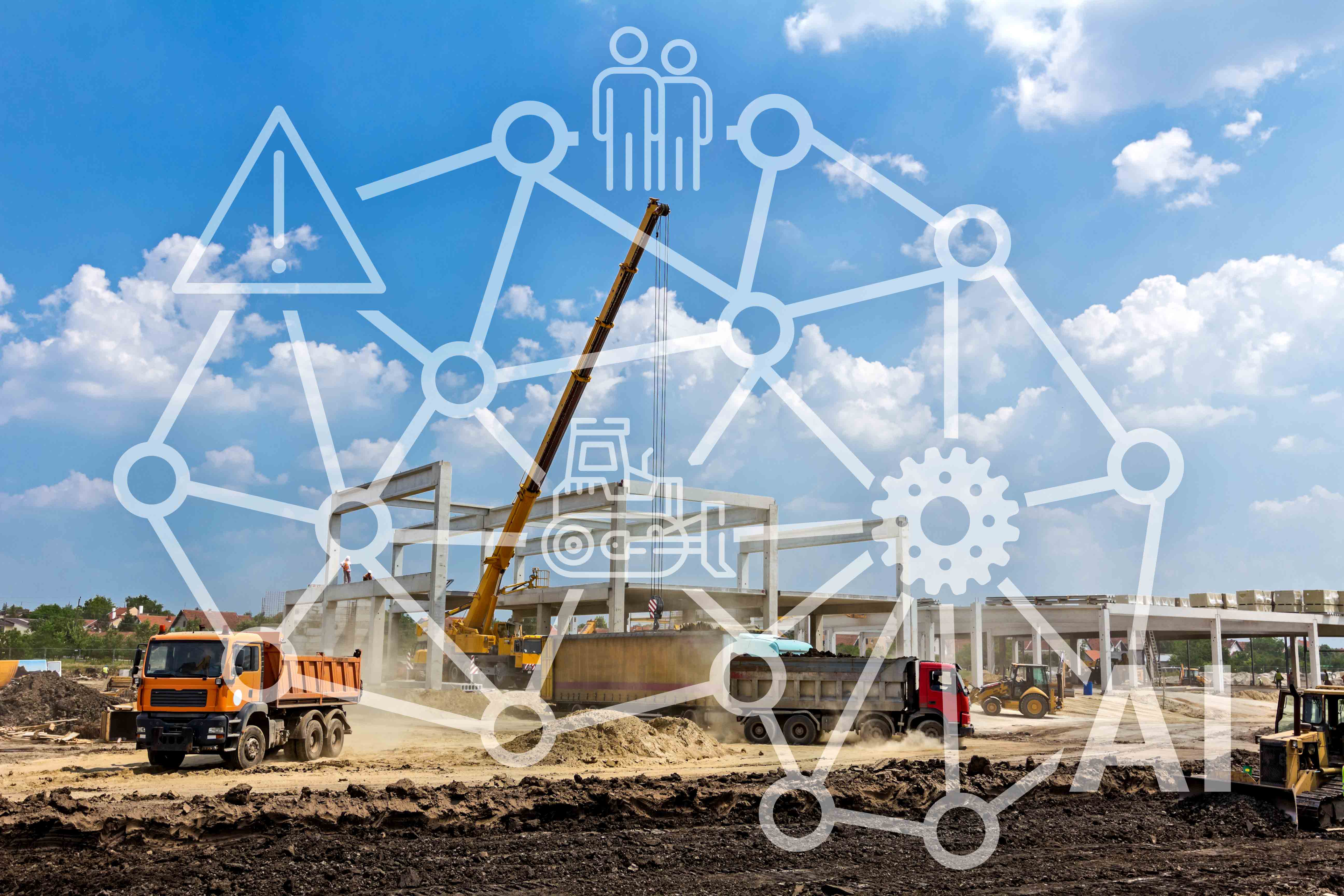
AI adoption in construction is accelerating fast. According to ServiceTitan’s 2026 Commercial Specialty Contractor Industry Report, 38% of contractors now report measurable business impact from AI. That’s more than double the 17% who said the same just a year earlier.
AI in construction safety is following that same trajectory, and for good reason. For large-scale projects, robust safety management is essential. AI equips contractors with tools to predict risks, prevent accidents, and protect workers.
However, a critical piece of technology adoption is prioritizing use cases that make sense for your business. The technology one company is leveraging may not be the best option for your construction business.
So if you’re looking to implement more AI into your operation, begin with the risk you already know about. That’s usually the clearest signal for which piece of AI is worth bringing on first, and it’s a far better filter than trying every option at once.