
Fuel is no longer a predictable line item in construction budgets. Diesel price volatility—driven by supply constraints, geopolitical instability, and regional demand shifts—continues to put pressure on already tight margins. According to the U.S. Energy Information Administration (EIA), national diesel prices recently climbed above $5.60 per gallon nationally, increasing pressure on contractors operating fuel-intensive equipment fleets.
For many companies, fleet management fuel costs is now one of the top operating expenses across both heavy equipment and on-road fleet—yet it remains one of the hardest costs to full control. The challenge is not just the price at the pump. It’s the lack of visibility into how fuel is actually being consumed across jobsites, crews, and assets.
Industry research shows that 10–30% of construction equipment fuel consumption is tied to nonproductive idling, making fuel visibility and idle reduction increasingly important for fleet performance. At the same time, fuel usage can vary significantly between similar machines depending on utilization patterns, operator behavior, and jobsite conditions. Without asset-level insight, those inefficiencies are difficult to identify before they impact project margins.
As a result, fuel often remains a reactive expense—something contractors review after the money has already been spent. But with connected equipment and fuel data, companies can start managing fuel more proactively, uncover inefficiencies faster, and make better operational decisions across the fleet.
Why Fuel Costs Are So Difficult to Control
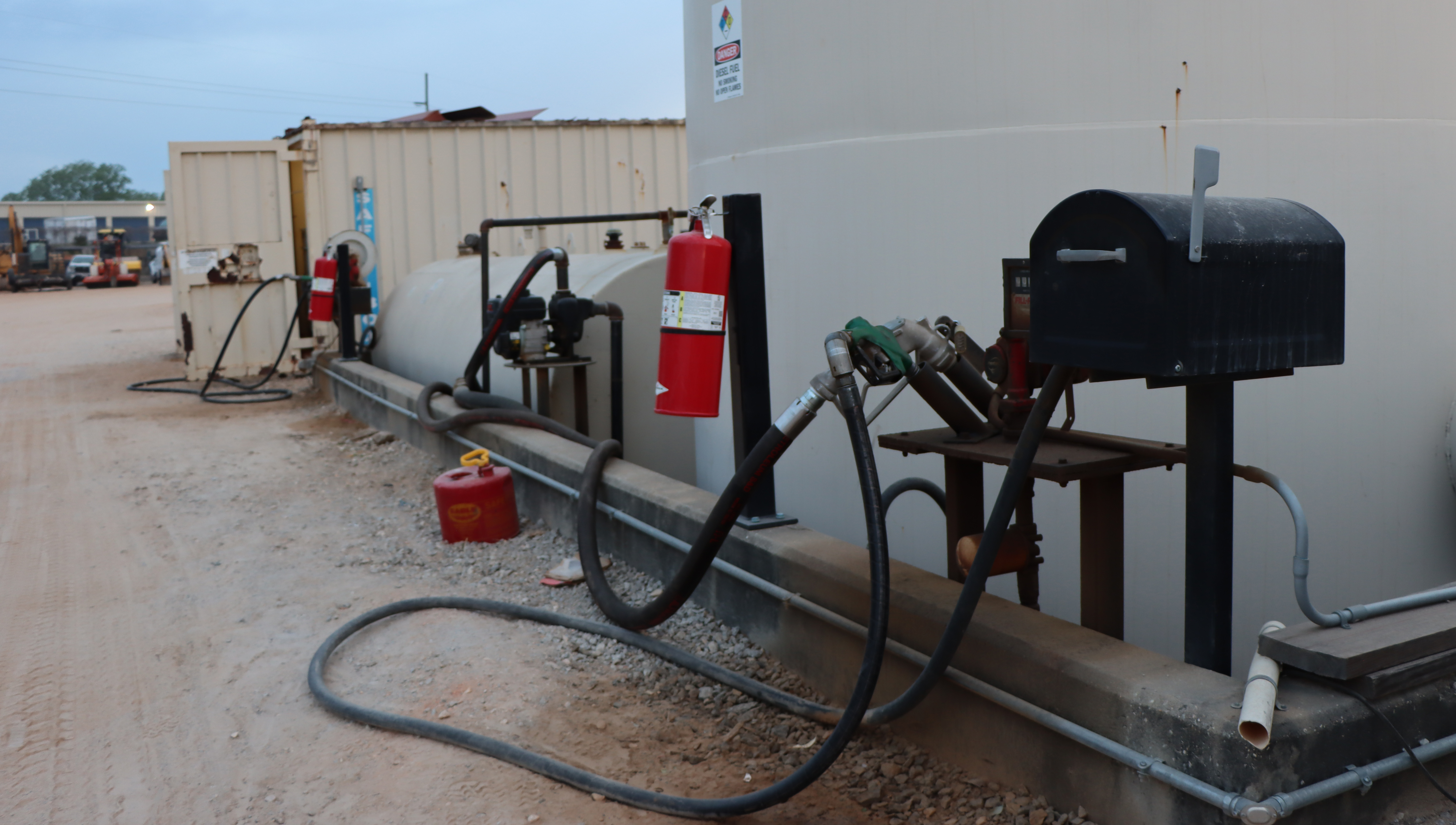
Fuel is one of the most widely distributed and inconsistently tracked expenses in construction. Unlike centralized costs, fuel is consumed across heavy equipment, on-road fleets, and multiple jobsites with shifting crews and operators.
This causes three core challenges:
- Fragmented data sources: Fuel purchases, equipment usage, and jobsite activity often live in separate systems, if at all.
- Limited asset-level visibility: Without tying fuel to specific machines or vehicles, it’s impossible to understand true consumption patterns.
- Reactive cost management: Fuel spend is typically reviewed after the fact, rather than actively managed in real time.
The result: inefficiency, waste, and missed opportunities to optimize one of the largest operating costs in the fleet.
Turning Fuel Data Into a Controlled Fleet Performance Metric
The real shift in fuel management happens when spending data is no longer viewed in isolation. On its own, fuel cost tells you what you spent, but it doesn’t explain why, or whether that spend reflects productive work in the field.
When fuel data is connected to equipment activity, things like runtime, idle time, and jobsite utilization, it becomes possible to understand fuel at a much more operational level. This shift is what makes fuel costs controllable.
Rather than guessing where inefficiencies exist, teams can pinpoint them at the asset and project level, and the result is clearer understanding of how equipment behavior directly impacts fuel spend. Over time, this leads to more accurate forecasting, better budgeting, and a stronger understanding of true operating costs across the fleet.
The Hidden Cost of Idling
One of the most obvious (but hard to manage) drivers of fuel waste is idle time.
When equipment sits running without performing productive work, it continues to burn fuel while adding unnecessary wear to the engine. Across an entire fleet, even small amounts of idling can translate into significant costs.
With Tenna’s idle reporting and equipment tracking, contractors can identify:
- Which machines idle the most
- Where idle time is concentrated
- How idle behavior correlates with fuel consumption
Even modest reductions in idle time can lead to immediate fuel savings, while also extending equipment lifespan and reducing maintenance costs.
For example, Royal Electric, a Tenna customer, was able to leverage idling reports to expose high consumption habits. Simple fixes led to $9,000 per month in fuel savings for the contractor.
Bringing Accountability Into Fuel Management
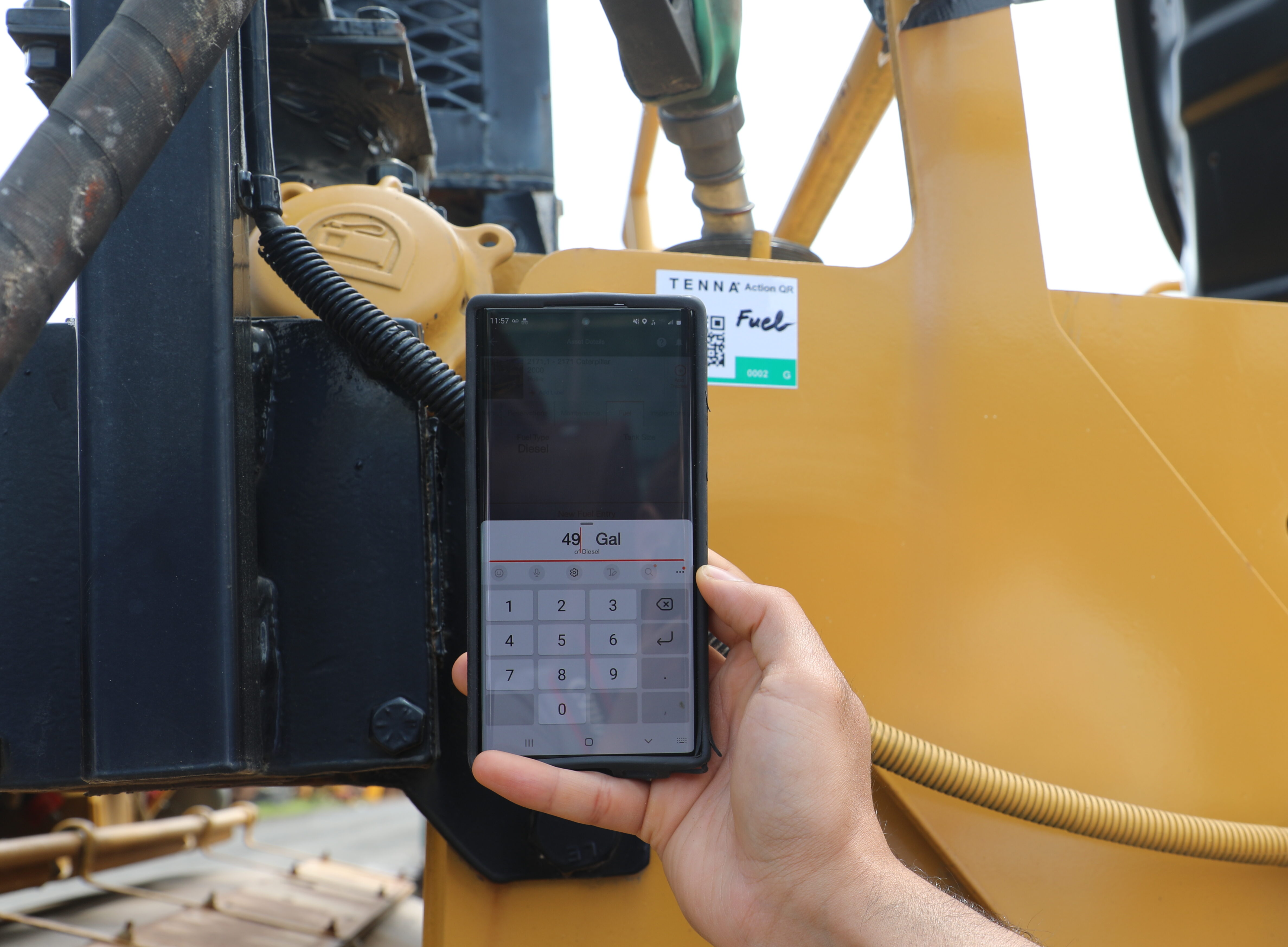
Fuel is a distributed expense. It’s used across crews, job sites, and shifts, which makes accountability difficult without the right systems in place.
When fuel data is disconnected, it’s hard to verify whether purchases are legitimate or aligned with actual equipment usage. But when transactions are tied directly to assets and cross-referenced with operational data, inconsistencies become much easier to spot, such as:
- Fuel purchases that exceed expected tank capacity
- Transactions occurring outside normal operating hours
- Machines consuming more fuel than comparable assets
- Gaps between reported usage and actual runtime
This level of transparency not only reduces misuse but also builds a culture of accountability across the organization.
From Visibility to Better Fleet Decisions
Fuel efficiency isn’t just about consumption—it’s about utilization.
When contractors can see fuel consumption alongside utilization data, they gain a clearer understanding of which assets are contributing to productivity and which are not. Some machines may be underutilized, while others are overworked and consuming more fuel than necessary.
This level of visibility enables better decisions around:
- Equipment deployment across jobsites
- Fleet right-sizing
- Asset rotation and utilization balancing
GS Construction leveraged fuel data in Tenna for an unusual use case: The contractor was already considering moving its office to a new location, but before doing so, looked at its fuel costs and potential fuel savings based on Tenna data over the last few years. The contractor realized they’d save over one million dollars in fuel in just one year by moving the office 20 miles closer to frequent project sites—so that’s what they did.
Measuring What Matters in Fleet Fuel Performance
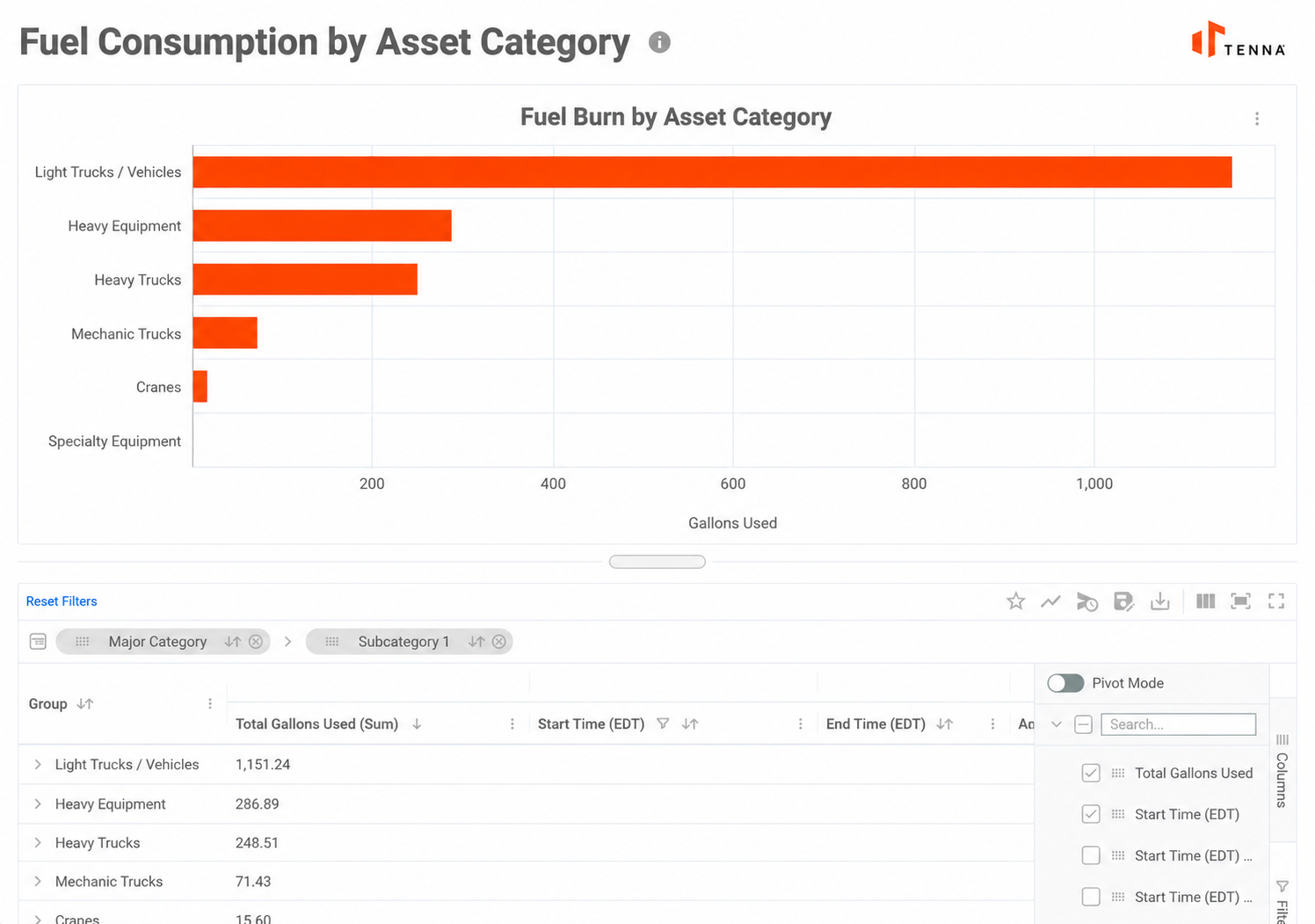
To effectively control fuel costs, contractors need to focus on more than total spend and measure a few key performance indicators. Metrics like fuel cost per hour, idle time percentage, fuel consumption per asset class, fuel efficiency by jobsite or project, and utilization versus fuel burn ratio.
When these metrics are tracked within a single system, like Tenna, it become easier to identify trends, measure improvements, and hold teams accountable for results. This creates a feedback loop where better data leads to better decisions—and better decisions lead to lower fleet management fuel costs.
Saving Time While Improving Fuel Accuracy
Fuel management is often as much an administrative burden as it is a cost challenge. Contractors rely on collecting receipts, entering transactions, and reconciling data across systems.
Tenna eliminates much of this manual effort by centralizing fuel entry and linking it directly to equipment records. This not only reduces administrative burden but also improves accuracy and ensures that decision-makers always have access to up-to-date information.
Extending Visibility with Fuel Card Integrations
For contractors already using fuel card systems, such as WEX, Tenna adds a critical layer of operational context. WEX captures detailed fuel transaction data at the point of purchase, but when integrated with Tenna, this data is automatically connected to specific equipment or vehicles in the fleet.
This enables contractors to:
- Reconcile fuel purchases automatically
- Eliminate manual data entry and receipt tracking
- Align financial spec with equipment-level usage
- Improve audit readiness and compliance reporting
Why Tenna
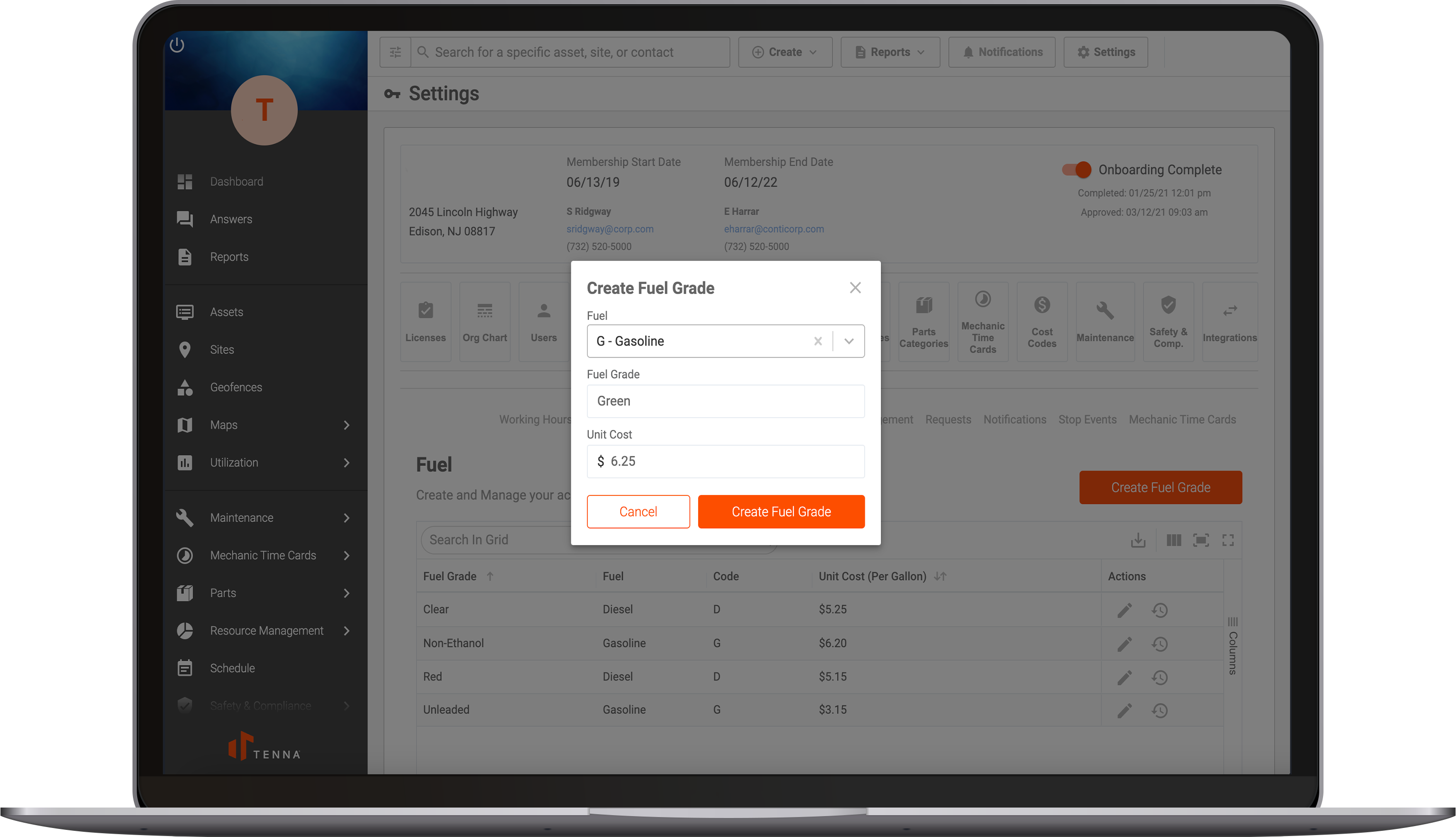
Managing construction fleet management fuel costs requires more than tracking expenses—it requires understanding how fuel use connects to real-world operations. Tenna gives contractors a unified view of fuel consumption, idle time, utilization, and equipment activity across every asset and jobsite.
That visibility makes it possible to reduce waste, improve accountability, and optimize equipment usage—all from a single platform. In a high-cost, high-volatility fuel environment, that level of visibility is no longer optional. It’s a competitive advantage.