
Insurance captives are tightening requirements. Brokers are pushing for documented safety improvements. And contractors across the country are responding the same way: going to market fast for on-road fleet telematics.
That urgency is understandable, and in many cases, the pressure is legitimate. Fleet safety matters. Compliance matters. Reducing risk exposure matters. When your insurance captive sets a deadline, you move.
But here’s the problem most contractors don’t see until it’s too late: many of these fleet procurement processes are being driven in isolation by fleet managers, risk managers, or insurance stakeholders without any consideration of the broader operational ecosystem those vehicles operate within.
The result? A solution that checks the compliance box today while quietly creating structural inefficiencies that cost far more tomorrow.
Fleet-only fleet procurement may solve an immediate risk problem on the road, but it routinely creates long-term operational and financial inefficiencies that undermine the very gains it was meant to deliver.
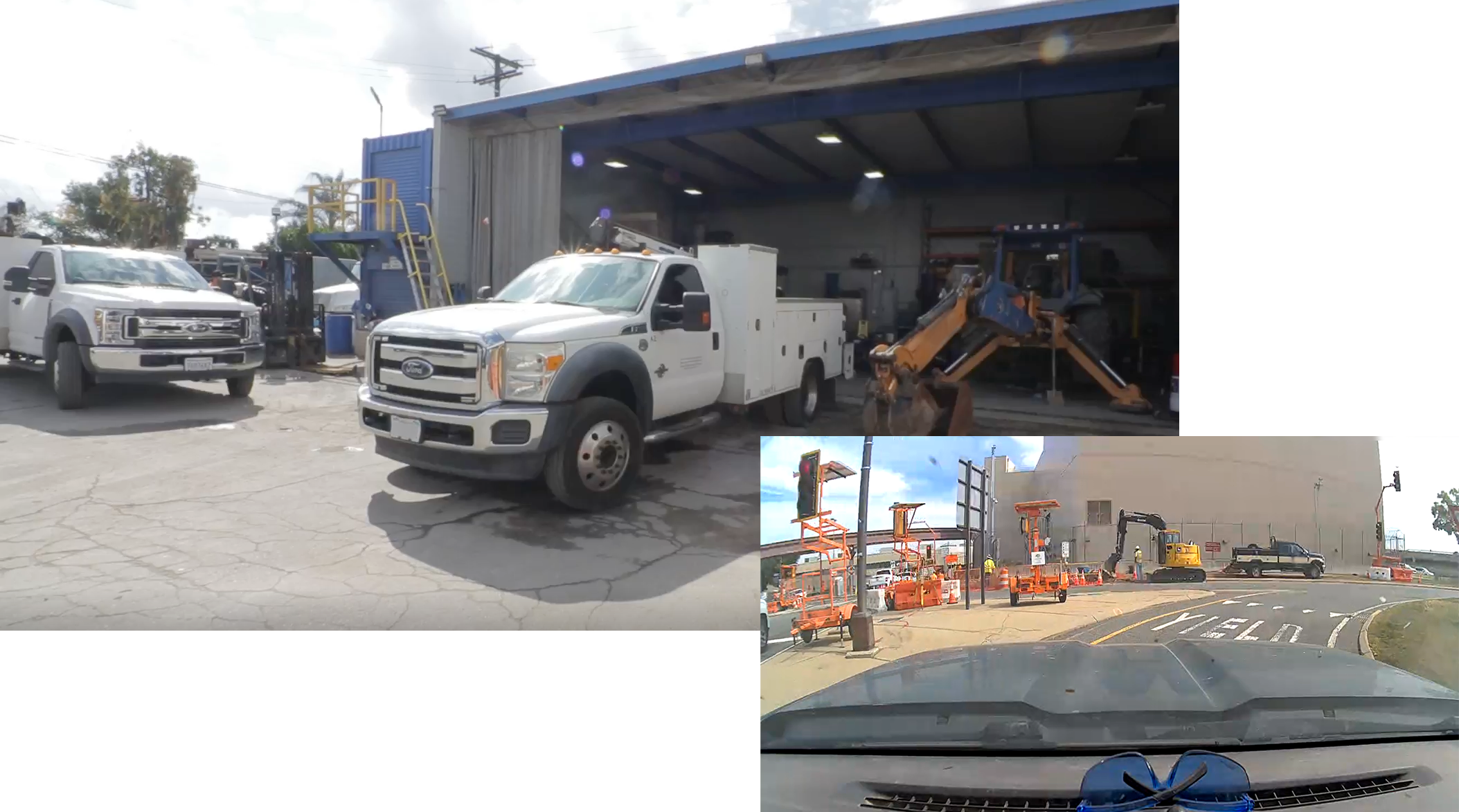
What’s Driving Fleet-Only Fleet Procurement Right Now
To be clear about what’s happening in the market: this isn’t a careless trend. There are real, legitimate forces pushing contractors toward rapid fleet procurement decisions.
Captive insurance mandates are the most common catalyst. Contractors operating under captive insurance structures are being asked (sometimes required) to implement specific technologies: dash cams, driver monitoring systems, telematics with ADAS capability, driver scorecards. These mandates often come with compliance windows measured in weeks or months, not quarters.
Safety-first buying behavior follows naturally from that pressure. The buying criteria narrows to: Does it have video telematics? Does it score driver behavior? Does it have AI-powered incident detection? Those are meaningful questions. But they’re incomplete ones when they’re the only questions being asked.
What gets lost in this dynamic is perspective. The fleet team buys what solves the immediate problem. The rest of the organization must find ways to adapt that technology throughout disconnected systems, operate without a total solution for the rest of their construction fleet, or become a victim of too many disconnected systems. This is where the long-term value of the intended purchase is voided.
The Hidden Cost of Siloed Fleet Procurement
When fleet procurement happens in isolation, the downstream effects tend to be invisible at signing and painfully visible within 18 to 24 months as we hear from most of our customers who have gone down this journey.
Split Procurement Creates Split Systems
In a typical mid-size to large contracting operation, assets are managed across multiple functions: the fleet team oversees on-road vehicles, the equipment team manages yellow iron and heavy assets, the shop handles maintenance, and accounting owns financial reporting.
When each of those functions procures technology independently, or when a fleet procurement decision doesn’t account for the others, you end up with a fragmented technology stack. Fleet is running one telematics platform. Equipment is running another. The shop is working from spreadsheets or a standalone maintenance system. Accounting is trying to reconcile data from all of them.
The result: data silos, duplicate asset records, manual data reconciliation, and reporting that never quite tells the full story. When procurement is segmented, your technology stack becomes segmented, and a segmented stack is an operationally expensive one.
Vendor Bloat Becomes a Hidden Operating Cost
Multiple platforms mean multiple contracts, multiple renewal cycles, multiple support relationships, and multiple integration projects that never quite go far enough. This “vendor sprawl” is one of the most underestimated costs in construction technology — not always because any single contract is large, but because the aggregate management burden is enormous.
There’s also an accountability problem. When a workflow breaks down across multiple platforms, no single vendor owns the outcome. Every support call becomes a finger-pointing exercise. Accountability gets diluted precisely when you need it most.
The “one throat to choke” principle isn’t just a vendor management cliché. It’s a real operational advantage. A unified platform means one team owns the full workflow, one contract defines the relationship, and one escalation path resolves problems.
You Surrender Negotiating Leverage
Procurement professionals understand this intuitively: consolidated purchasing creates leverage; fragmented purchasing destroys it. When fleet, equipment, and operations each run separate RFPs for separate solutions, volume discounts evaporate, enterprise-wide standardization becomes politically difficult to achieve later, and you’re renegotiating from a position of dependency rather than strategic partnership.
Contractors who approach fleet procurement as part of a unified operational technology strategy consistently achieve stronger commercial terms than those who buy reactively by function.
Solving Dime Problems While Creating Dollar Problems
There’s a procurement trap that shows up repeatedly in construction: buying for features rather than buying for outcomes.
Fleet-only procurement often chases a specific feature set: AI dash cams, harsh braking detection, speed alerts, driver scorecards. Those features matter. They’re exactly what an insurance captive is asking for, and they deliver real safety value. No one is arguing otherwise.
But feature sets evolve quickly. Today’s differentiating capability is tomorrow’s commodity. More importantly, the features that satisfy an insurance mandate rarely address the larger operational inefficiencies that are quietly draining margin from your business.
The same logic applies to how performance is measured. Driver scorecards are a standard feature of fleet telematics, but driver behavior is only one dimension of operational performance. Operational scorecards that span asset utilization, equipment idle time, maintenance compliance, and jobsite productivity give leadership a far more complete picture of where margin is being protected and where it’s being lost. A fleet-only platform, by definition, can only score what it sees. If the goal is operational improvement — not just insurance compliance — the scorecard needs to reflect the full operation.
If your fleet procurement strategy is built around solving a narrow compliance gap, you risk ignoring the larger operational inefficiencies that are costing you far more. Fragmented asset visibility, duplicated maintenance workflows, siloed utilization data — these aren’t small problems. They compound across every project, every year.
The contractors who get this right ask a harder question: what technology investment gives us the most operational leverage across the entire business?
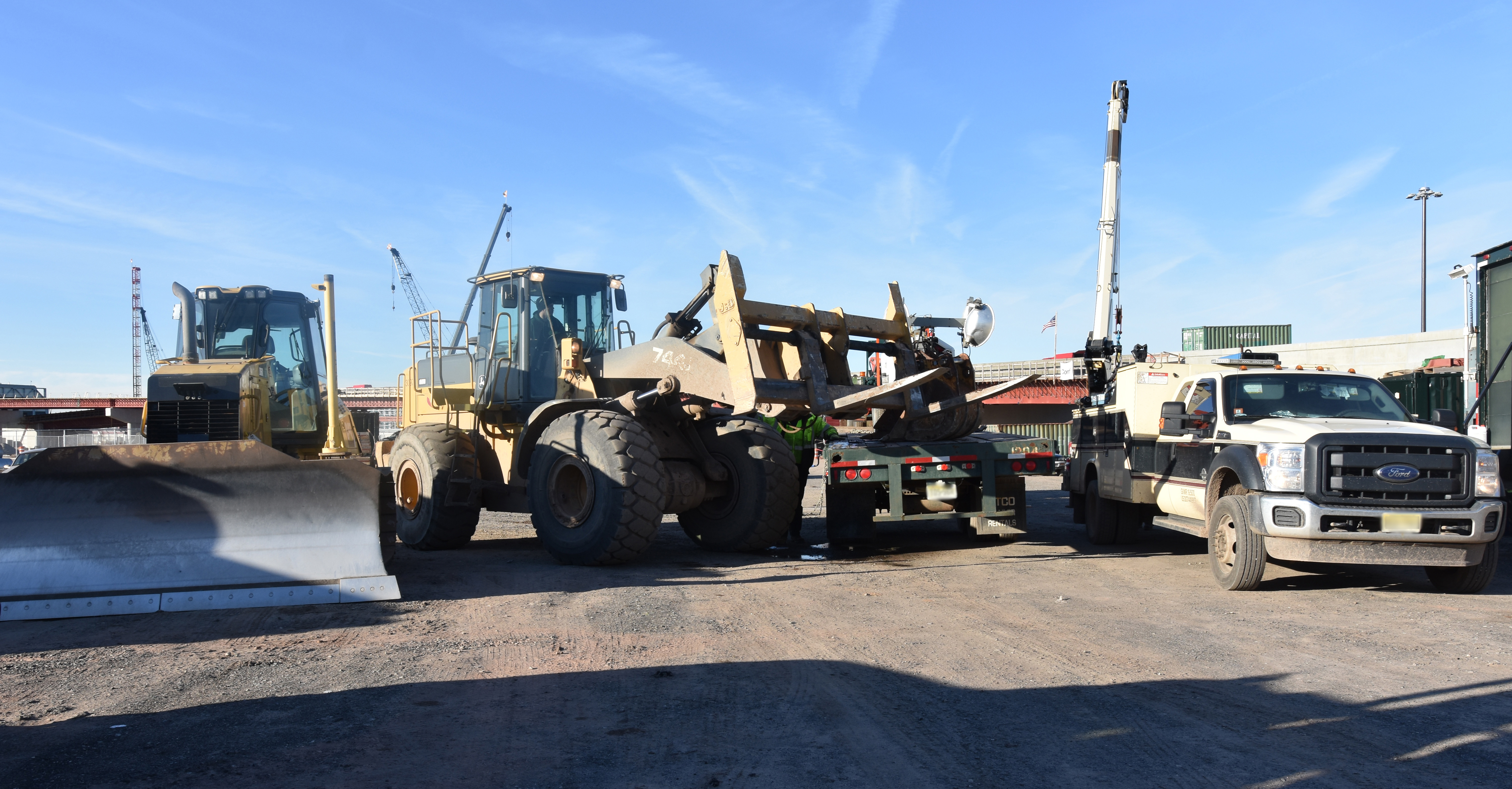
Construction Fleet Management Is About More Than On-Road Vehicles
Here’s a foundational truth about construction that fleet procurement processes too often ignore: construction companies don’t just run trucks, and safety matters equally on the jobsite as it does on the road.
A typical contracting operation manages a complex, interdependent asset portfolio: on-road fleet vehicles, heavy yellow iron, compact and small equipment, trailers, attachments, and tools, often spread across multiple active jobsites, yards, and service locations simultaneously.
When fleet procurement focuses exclusively on on-road vehicles, the rest of that asset base stays disconnected. Equipment utilization data lives in a different system, or no system at all. Maintenance workflows are split between shop management and field operations. Safety data for off-road assets, which carry significant liability exposure, isn’t integrated with on-road reporting. And when leadership asks for a consolidated view of asset performance across the business, no one can provide one.
This isn’t a technology limitation. It’s a procurement decision that created a structural gap.
Large-scale contractors have confronted this directly. Projects spanning hundreds of square miles — with 100 to 200+ mixed assets operating across service roads, undeveloped terrain, and active work zones — expose a fundamental limitation of fleet-only thinking. Many of the most serious safety events on these jobsites occur on non-DOT-regulated roads, where driving behavior still creates real liability but falls entirely outside the coverage of a standard fleet telematics solution. On-road safety and jobsite safety aren’t separate concerns for construction contractors. They’re two sides of the same risk equation, and a procurement strategy that only addresses one side leaves meaningful exposure unmanaged.
This is becoming increasingly difficult to ignore at a regulatory level as well. DOTs across the U.S. and now Canada are implementing work zone camera requirements that fleet-only solutions can sometimes satisfy but only partially. On-road vehicle coverage may meet the letter of a mandate while leaving the broader work zone operation unaddressed. Heavy equipment operating within those same work zones requires a purpose-built camera solution designed for construction-specific conditions. A fleet procurement strategy that doesn’t account for heavy equipment camera systems isn’t just operationally incomplete; in an evolving regulatory environment, it may not stay compliant for long.
Holistic asset visibility across on-road fleet, heavy equipment, and small assets is one of the most powerful operational levers available to a contracting business. But you can only achieve it if your fleet procurement strategy is designed to support it.
What Safety Leaders Should Be Looking For and Why Their Influence Matters
Safety leaders are often the unsung drivers of meaningful technology adoption in construction. When a captive mandate hits, they’re the ones who understand the urgency, know what the technology needs to do, and have the credibility to push procurement forward. That influence is real, and it matters.
But that influence also creates an opportunity that’s worth naming directly: safety leaders who think beyond the compliance requirement can shape procurement decisions that benefit the entire organization.
The most effective safety leaders are already starting to ask a harder question: if we’re investing in safety technology for our on-road fleet, what does that mean for the rest of our asset base?
Off-road equipment carries significant safety exposure that rarely gets the same structured attention as DOT-regulated vehicles. Incidents involving heavy equipment, compact machinery, and job site assets create liability, impact project timelines, threaten your safety records, and affect workforce morale, but that data often lives outside any integrated, digitized safety reporting system. A fleet-only procurement decision doesn’t change that. A unified platform can.
There’s also a credibility argument worth considering. Safety leaders who can present consolidated safety performance data across all asset classes, not just trucks, see ROI faster in time and dollars, and are therefore in a fundamentally stronger position when making budget requests, defending program investments, or reporting to ownership. Siloed safety data makes it harder to tell a complete story. Unified data makes it easier to prove the value of what you’re building.
The Case for Unified Fleet Procurement
The alternative to fragmented fleet procurement isn’t more complexity — it’s a deliberate choice to evaluate platforms against a broader operational standard.
A unified fleet and equipment management platform delivers capabilities that a fleet-only solution structurally cannot:
- Unified asset tracking across on-road vehicles, heavy equipment, trailers, mid-sized and small assets, attachments, tools, parts and more
- Shared safety data that covers all asset classes, not just DOT-regulated vehicles
- Centralized maintenance workflows that give shop managers a single system across the entire fleet
- Integrated utilization insights that inform equipment deployment, rental decisions, and capital planning
- Cleaner financial integrations that reduce manual reconciliation between operations and accounting
- Standardized reporting that gives ownership and executives a real-time view of the entire asset portfolio
Construction is operationally complex by nature. Jobsites are distributed. Asset bases are large and heterogeneous. Crews move constantly. Your technology stack should reduce that complexity, not replicate it in digital form.
Read how equipment management can lower construction business insurance costs.
Before You Enter a Fleet Procurement Process, Ask These Questions
If you’re currently in or about to enter a fleet procurement process, the following questions can help you stress-test the scope of what you’re evaluating. These are worth asking at the ownership and executive level, not just with the fleet team.
Does this solution extend beyond on-road fleet vehicles? If the answer is no, ask whether that limitation is acceptable given the full scope of assets your business manages.
Can it scale to cover equipment, small assets, and tools? A platform that works well for trucks today may create a separate silo problem for equipment tomorrow.
Will this reduce or increase our total vendor count? Fewer vendors with broader capabilities is almost always a more sustainable operating posture than more vendors with narrow ones.
Does it integrate cleanly with our financial and ERP systems? Data that lives in telematics but never reaches accounting isn’t delivering its full value.
Are we solving a compliance problem or a strategic visibility problem? Both matter, but they have different implications for which platform you should choose.
What happens in three years when we want to consolidate platforms? Migration is expensive, disruptive, and politically difficult. It’s far cheaper to make the right choice now.
Who is at the table for this decision? Fleet procurement decisions with long-term operational implications should involve operations, finance, and IT, not just the fleet or risk management team.
Procurement Strategy Should Match Your Operational Strategy
Captive insurance pressure isn’t going away. If anything, mandates around driver monitoring, video telematics, and fleet safety technology will become more prescriptive over time. That pressure is real, and responding to it is not optional.
But there’s a meaningful difference between reactive fleet procurement and strategic fleet procurement.
Reactive procurement solves the immediate compliance requirement and often creates a new set of operational problems in the process. Strategic fleet procurement treats the compliance requirement as a catalyst to invest in broader operational capability: unified asset visibility, centralized workflows, integrated data, and a technology foundation that scales with the business.
Smart fleet procurement in construction means thinking beyond trucks, and investing in platforms that support the entire operation, not just the assets that show up on your insurance schedule.
The contractors who win over the next decade won’t be the ones who bought the most features. They’ll be the ones who built the most cohesive operational systems and made technology procurement decisions that served the whole business, not just the function that was feeling the most pressure at the time.