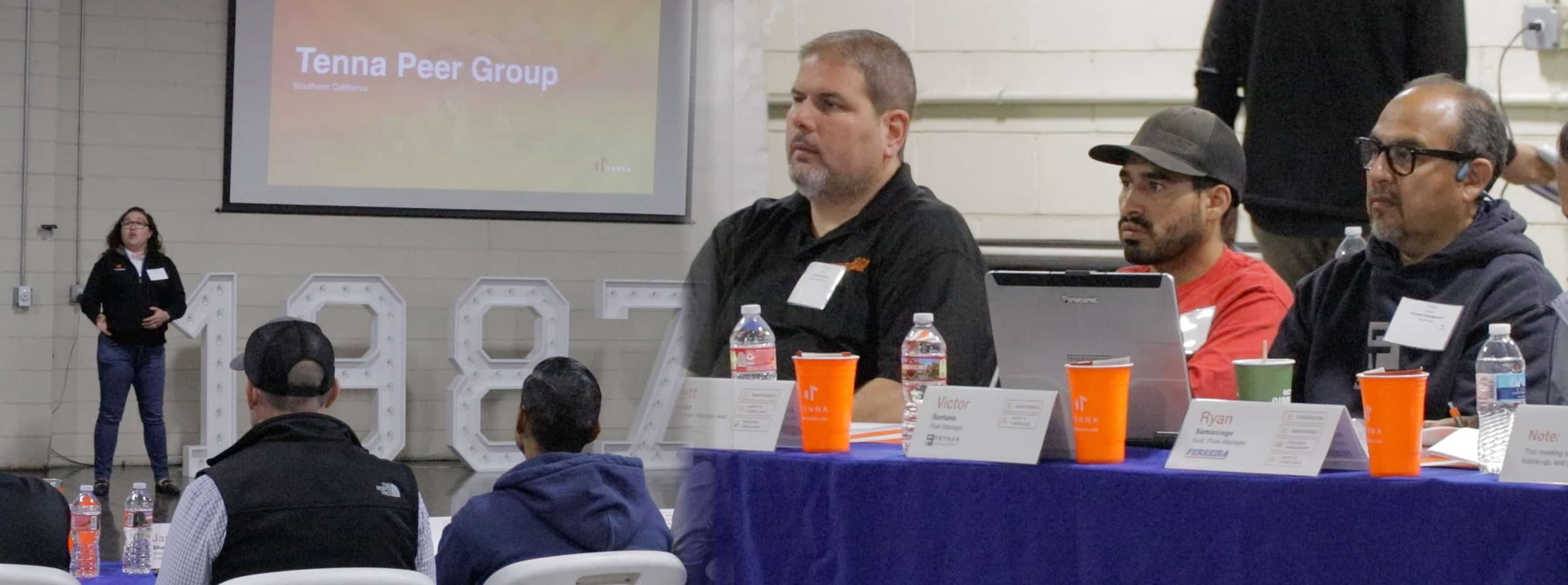
Recently, I had the opportunity to bring together over fifteen contractors across Southern California for a Tenna Peer Group. What made this gathering especially impactful was the mix of individuals in the room. We had customers who have been with Tenna for up to five years present alongside new users who haven’t even logged in yet.
That type of dynamic creates something you can’t replicate in a demo or a webinar, because when contractors talk to each other openly and honestly, you get a clear picture of what’s working for some in the field … and what still needs to be solved for others.
Construction industry insights that emerged from these conversations weren’t just how people are using Tenna, but how the industry itself is evolving. Here are a few of our biggest takeaways.
Equipment Reporting is About Action as Much as Visibility
One of the most consistent themes across the group was how reporting is shifting from passive to operational. Yes, contractors are still pulling utilization reports, but what they’re doing with that data is the challenging part.
One civil contractor shared how they’re using utilization reporting to actively move equipment between jobsites — pulling underutilized assets back to the yard and redeploying them where they’re needed. That kind of visibility is directly impacting cost.
Another Heavy Civil contractor shared how they have reduced their rentals by 50%, simply by understanding what they already had and using it better.
But what stood out most was something one of our pipeline contractors said:
“It’s one thing to have the data. It’s another to broadcast it.”
If a piece of equipment sits unused on a jobsite for two days, it becomes fair game for other projects. That only works if the information is shared with the operations team — not just sitting in a report someone reviews later.
We also heard other teams taking reporting a step further:
- Building custom utilization scorecards to track performance across projects
- Using idle reports to identify fuel waste and operator habits (with some seeing dramatic reductions after addressing it)
- Leveraging weekly work order reports to manage maintenance approvals and workflows in real time
- Using billing reports based on hours to reconcile internal equipment usage and challenge assumptions
One contractor described it best when reviewing underutilized equipment:
“Why is this excavator being used one day instead of twelve?”
Having answers to those operational questions and acting on related construction industry insights is where contractors are headed.
The Best Equipment Maintenance Programs Are the Ones Teams Actually Follow
Maintenance conversations were just as candid and revealing. Everyone agrees maintenance is critical but the gap between having a program and actually executing it consistently is where most teams struggle.
One contractor (new to Tenna) talked about adjusting oil change intervals based on real-world conditions and shortening cycles when contaminants appear. Others shared how they customize preventative maintenance schedules by asset type or category.
But the biggest takeaway wasn’t about strategy; it was about adoption.
One contractor raised a question many growing contractors are facing: What happens when you bring maintenance in-house after periods of growth, and doing it with third parties becomes unscalable?
The answer from the room was clear:
- If you don’t train your mechanics on the system, it won’t work.
- If you don’t spend time in the field with them during rollout, it won’t stick.
- If you don’t show them the “why,” you won’t get buy-in.
A contactor with nearly three years on Tenna shared a story about a senior staff mechanic with 20+ years of experience who initially resisted using Tenna maintenance altogether. Once they equipped him properly and tied the system to how he already worked — cost codes, workflows, etc. — he bought in. And once he did, his team followed.
That pattern came up repeatedly. Technology won’t replace experience, but it will amplify it if you bring people along the right way, and having technology is critical when bringing in younger talent who expect easier ways of doing this work.
Equipment Inspections are Faster and More Enforceable
Inspections sparked one of the most practical discussions of the day. The shift here is about removing friction while increasing accountability.
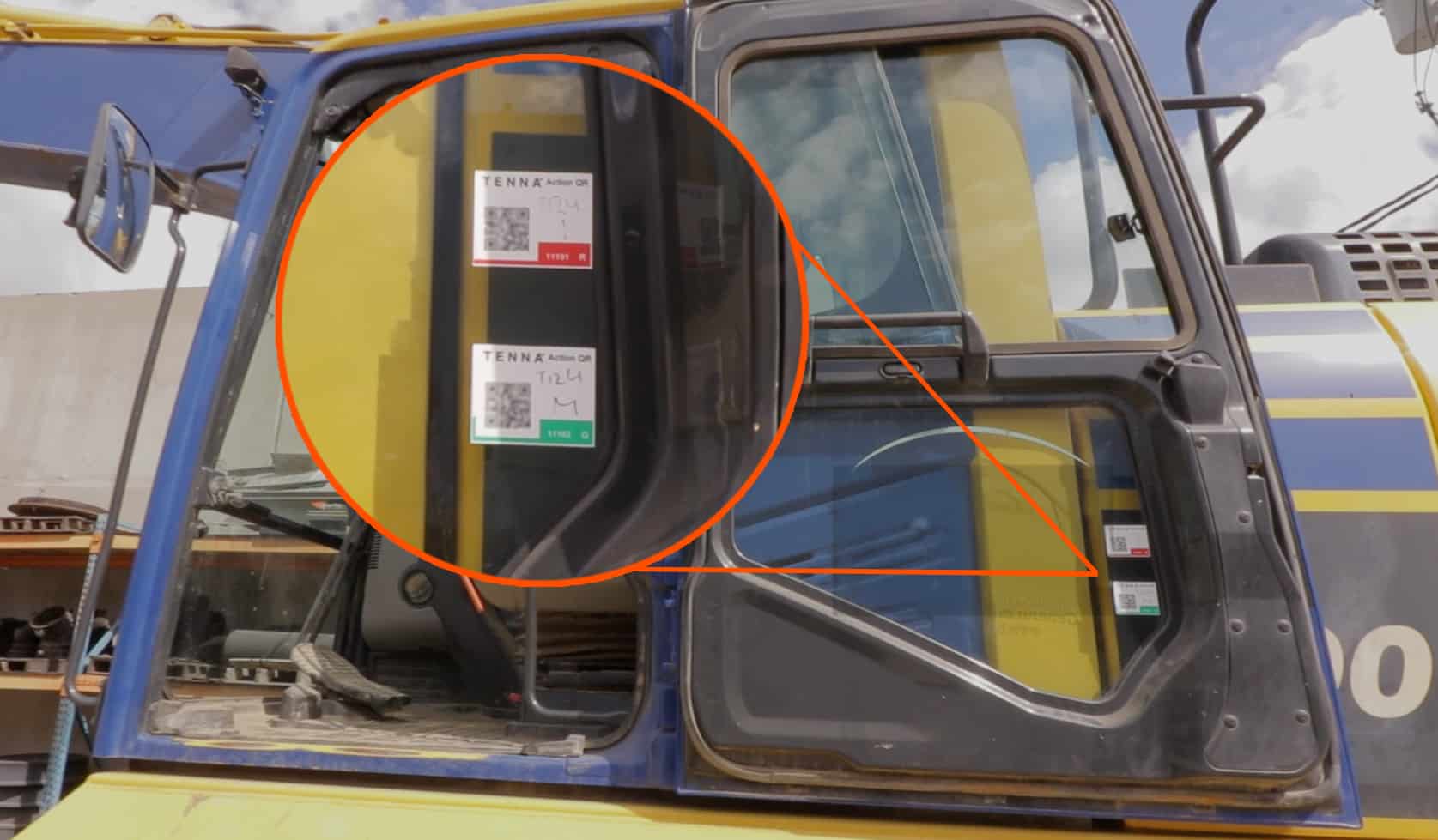
Several contractors are using Tenna’s Action QR codes on equipment as shortcuts for key workflows — some for inspections, one for maintenance requests, others for assignment. Operators scan, complete, and move on in just minutes.
As one equipment manager put it:
“They love them. It’s simple.”
Others are going further by customizing inspections at the asset level:
- Requiring photos before an inspection can be completed
- Adding mandatory comments
- Designing inspection workflows specific to how different equipment wears over time
But even with better tools, the real challenge is compliance. How do you make sure inspections are actually getting done?
The answers weren’t complicated:
- “They are not an option.”
- Track completion reports and address gaps directly.
- Train teams together so they understand the process.
- Build it into company policy — not just a suggestion.
And most importantly: communicate why it matters. When teams understand that inspections are about safety, compliance, and protecting them, and not just checking a box, adoption follows.
Dash Cameras Have Crossed the Line Into “Standard”
If there was one topic that generated near-universal agreement, it was cameras. Almost every contractor in the room was already using Tenna’s cameras or actively rolling them out.
We discussed how mindsets have changed. Cameras are no longer seen as optional or experimental. They’re becoming part of the standard operating environment driven by real risks contractors face as well as the litigious environment surrounding the industry. Several contractors who swore they would never implement dash cameras have now all done so.
The conversation focused on driver safety and fatigue detection with audio alerts, real-time alerts for risky behavior and using footage for coaching — not just discipline. One contractor shared how alerts have helped identify situations where drivers were falling asleep — something that’s uncomfortable to talk about, but critical to address.
There were also honest conversations about rollout challenges:
- Pushback on apps and privacy concerns
- The importance of clear communication with staff before implementation
- Policies around company vehicles vs. personal vehicles
One contractor summed it up simply:
“If you want to drive a company vehicle, this is part of the requirement. If you don’t want to use Tenna, you can drive your own vehicle.”
That level of clarity is what makes adoption work. This is where we’re seeing some of the most momentum — and where peer collaboration is especially valuable.
The Real Takeaway: Contractors Want Practical, Proven Ways to Improve Equipment Operations
What stood out most to me wasn’t just the unique use cases shared but also the mindset in the room.
Contractors aren’t looking for more features. They’re open minded and looking for:
- Proven ways to reduce costs
- Practical workflows their teams will actually follow
- Clear ways to improve safety and accountability
- Confidence that what they’re doing is working
And they trust each other more than anyone else to validate that. That’s why these peer groups matter. When someone across the table says, “We reduced rentals by 50%,” or “This completely changed how we manage billing,” it carries a different weight.
Why These Construction Industry Insights Matters
The construction industry is in the middle of a shift. Data is more available than ever. Technology is more accessible than ever. The contractors pulling ahead definitely aren’t the ones with the most tools. They’re the ones consolidating their data and using their tools intentionally — and learning from others who are doing it well.
That’s exactly what we saw in Southern California, and it’s something we’ll keep investing in at Tenna.