
When construction companies search for top rated heavy equipment maintenance systems, they’re not just looking for GPS tracking. They need systems built for the realities of mixed construction fleets made up of heavy iron, heavy trucks and all the parts and attachments that support those assets.
Heavy equipment doesn’t operate like on-road vehicles. It relies on CAN bus connections, OEM-specific data, engine hours, and fault codes to determine service needs. Generic vehicle maintenance tools simply don’t provide the level of insight contractors need. The top rated heavy equipment maintenance systems are designed specifically for the complexity, cost, and operational impact of heavy equipment.
This blog covers why heavy equipment requires a different maintenance system than purely on-road fleets and why generic systems fall short, as well as the top rated heavy equipment maintenance systems on the market today.
Why Heavy Equipment Requires a Different Maintenance System
Unlike passenger vehicles or light-duty trucks, construction equipment:
- Uses CAN bus systems to transmit diagnostic and fault code data
- Requires different OEM-specific cables and connectors
- Depends on engine hours — not miles — for preventive maintenance
- Operates across jobsites with varying environmental conditions
- Directly impacts uptime, safety, and project schedules when maintenance is missed
A missed oil change on a pickup truck is inconvenient. A missed service on a dozer or excavator can delay an entire job. That’s why equipment maintenance systems exist to handle these unique requirements.
Why Generic GPS Trackers Fall Short for Heavy Equipment Maintenance
Generic GPS trackers are excellent at answering one question: Where is the asset?
They are not designed to answer: How is the machine running? When does it actually need service? What fault codes are active?
Common limitations of generic trackers include:
- No or limited access to CAN bus data or diagnostic fault codes
- Estimated (not actual) engine-hour readings
- No support for OEM-specific diagnostics
- Time-based maintenance alerts instead of usage-based triggers
- No connected work orders, parts tracking, or service history
For contractors managing expensive equipment across multiple jobsites, those gaps create risk — and unnecessary downtime.
What a True Heavy Equipment Maintenance System Includes
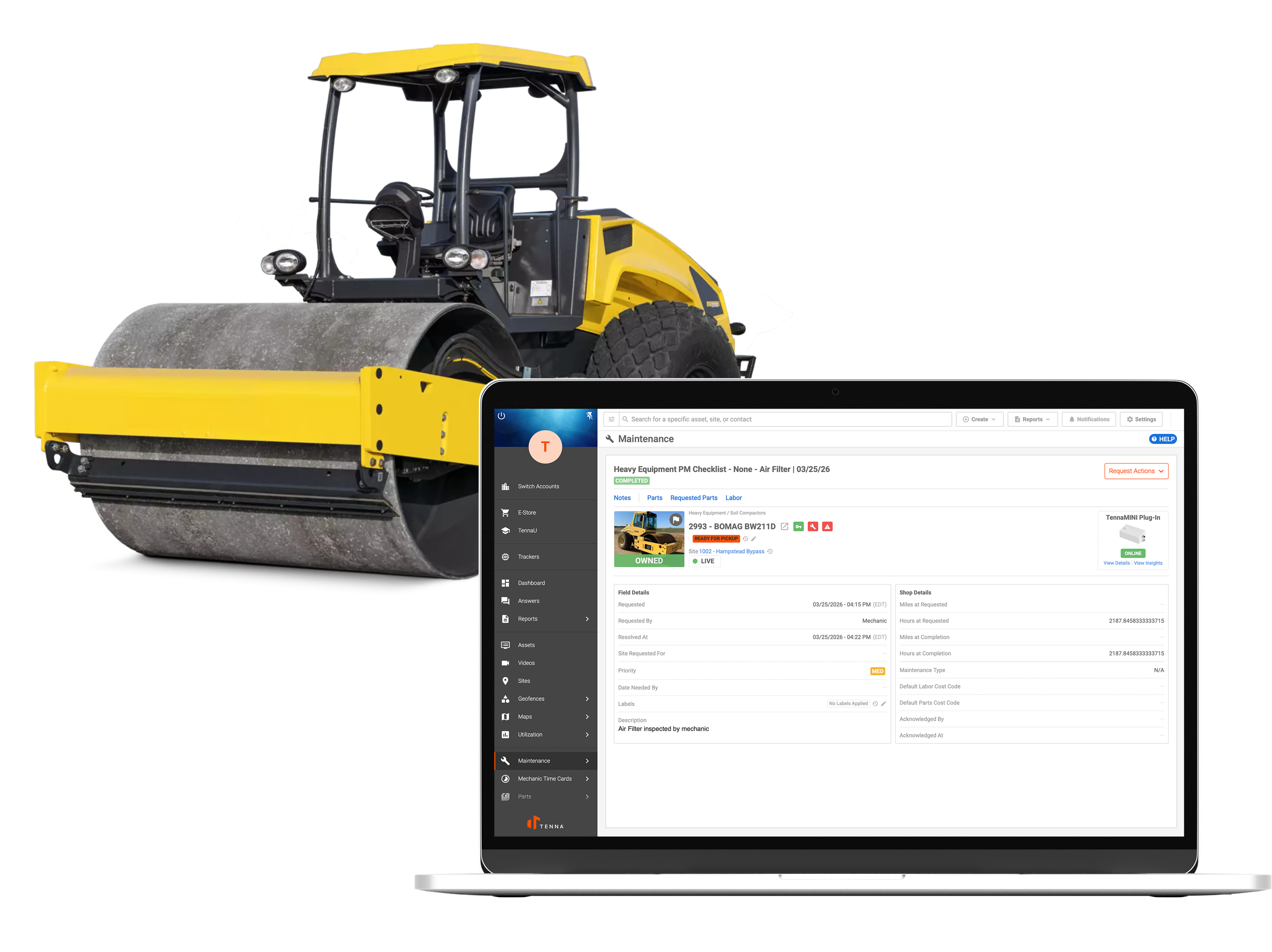
A top rated heavy equipment maintenance system combines construction-grade hardware with maintenance software workflows designed specifically for equipment operations.
Core capabilities include:
- CAN bus–enabled hardware capturing engine hours and diagnostics
- Support for multiple OEMs and equipment types
- Usage-based preventive maintenance scheduling
- Digital work orders and complete service history
- Parts inventory and mechanic labor tracking
- Integrated telematics and equipment utilization data
The key difference? Everything works together. Diagnostics feed maintenance, maintenance feeds reporting, and reporting ties back to uptime and cost.
Core Maintenance Software Capabilities for Heavy Equipment Fleets
Beyond diagnostics and telematics, the top rated heavy equipment maintenance systems stand out because of their maintenance software capabilities. This is where day-to-day operations actually happen – and where many platforms fall short.
For construction fleets, maintenance isn’t just about knowing when to service a machine. It’s about managing the full workflow from request to completion, across jobsites, teams, and equipment types.
Work Order Management
Work orders are the backbone of any maintenance operation. In heavy equipment environments, they need to be flexible, trackable, and connected to real equipment data.
Top systems allow teams to:
- Create, assign, and prioritize work orders
- Link work orders to equipment, jobsites, and fault codes
- Track status, completion time, and service history
- Attach photos, notes, and inspection results from the field
Preventive Maintenance Scheduling
Preventive maintenance should be driven by how equipment is actually used
The top rated heavy equipment maintenance systems enable:
- Service schedules based on engine hours, usage, or condition
- Automatic preventive maintenance triggers from telematics and diagnostics data
- Recurring service intervals aligned with OEM recommendations
- Alerts and reminders to prevent missed maintenance
Maintenance Requests & Field Reporting
Maintenance starts in the field, not the back office.
Leading systems include:
- Mobile maintenance request submissions with easy photo and voice note attachments
- Real-time issue reporting tied to specific equipment
- Standardized inspection forms and checklists
- Immediate visibility for maintenance teams
Parts Inventory Management
Parts availability is one of the biggest causes of maintenance delays.
Top systems provide:
- Centralized parts inventory tracking
- Real-time visibility into stock levels and usage
- Automatic allocation of parts to work orders
- Reorder alerts to prevent stockouts
Mechanic Time Tracking & Labor Management
Labor is a major component of maintenance cost — but often the least tracked.
The best platforms include:
- Mechanic time cards tied to work orders
- Labor tracking by task, asset, or jobsite
- Visibility into wrench time vs. admin time
- Reporting on labor cost per asset or service event
Why These Capabilities Matter
When work orders, parts, labor, and preventive maintenance are all managed in one system:
- Maintenance becomes proactive instead of reactive
- Downtime is reduced across jobsites
- Teams spend less time coordinating and more time fixing
- Costs are easier to track and control
This is what separates basic tools from the top rated heavy equipment maintenance systems used by high-performing contractors.
How We Ranked the Top Rated Heavy Equipment Maintenance Systems
To evaluate the top rated heavy equipment maintenance systems, we focused on one question: Does this platform truly support heavy equipment maintenance, or is it primarily fleet tracking software with basic service reminders?
Ranking criteria included:
- Native CAN bus diagnostic support
- Accurate engine-hour and fault code data
- Construction-specific maintenance workflows
- Integrated hardware and software
- Scalability across mixed fleets and jobsites
- Reporting that connects maintenance to uptime and cost
With these benchmarks, we identified the platforms that perform best in real-world construction fleets.
Top Rated Heavy Equipment Maintenance Systems for Construction
Tenna — Best Overall Heavy Equipment Maintenance System for Construction
Summary:
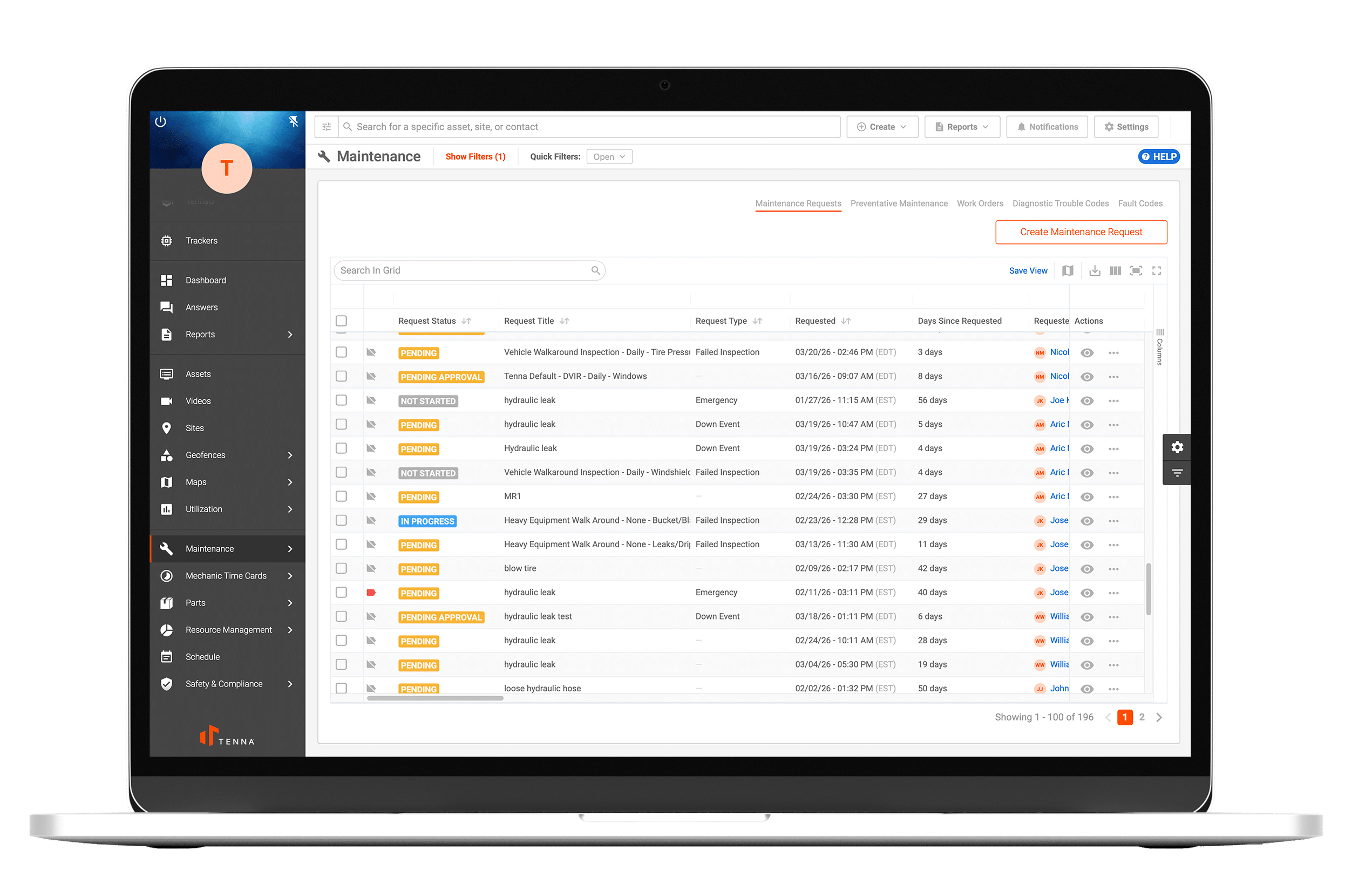
Tenna is built specifically for construction fleets. It combines rugged, CAN-bus-enabled hardware with full maintenance software capabilities, so diagnostics, preventive maintenance, work orders, parts, and labor tracking all operate within one connected system.
Strengths for Heavy Equipment:
- Construction-grade CAN bus and telematics hardware capturing engine hours, fault codes, and usage data
- Preventive maintenance tied to real machine usage
- Work order management, parts inventory, and mechanic time tracking in one platform
- Maintenance requests and field reporting built for jobsites
- Jobsite-aware workflows and reporting
- Construction cost codes
- Designed for mixed fleets (heavy equipment, vehicles, tools, etc.)
Considerations:
Best suited for contractors managing mixed fleets and significant heavy equipment. May be more robust than needed for very small on-road-only fleets.
HCSS
Summary:
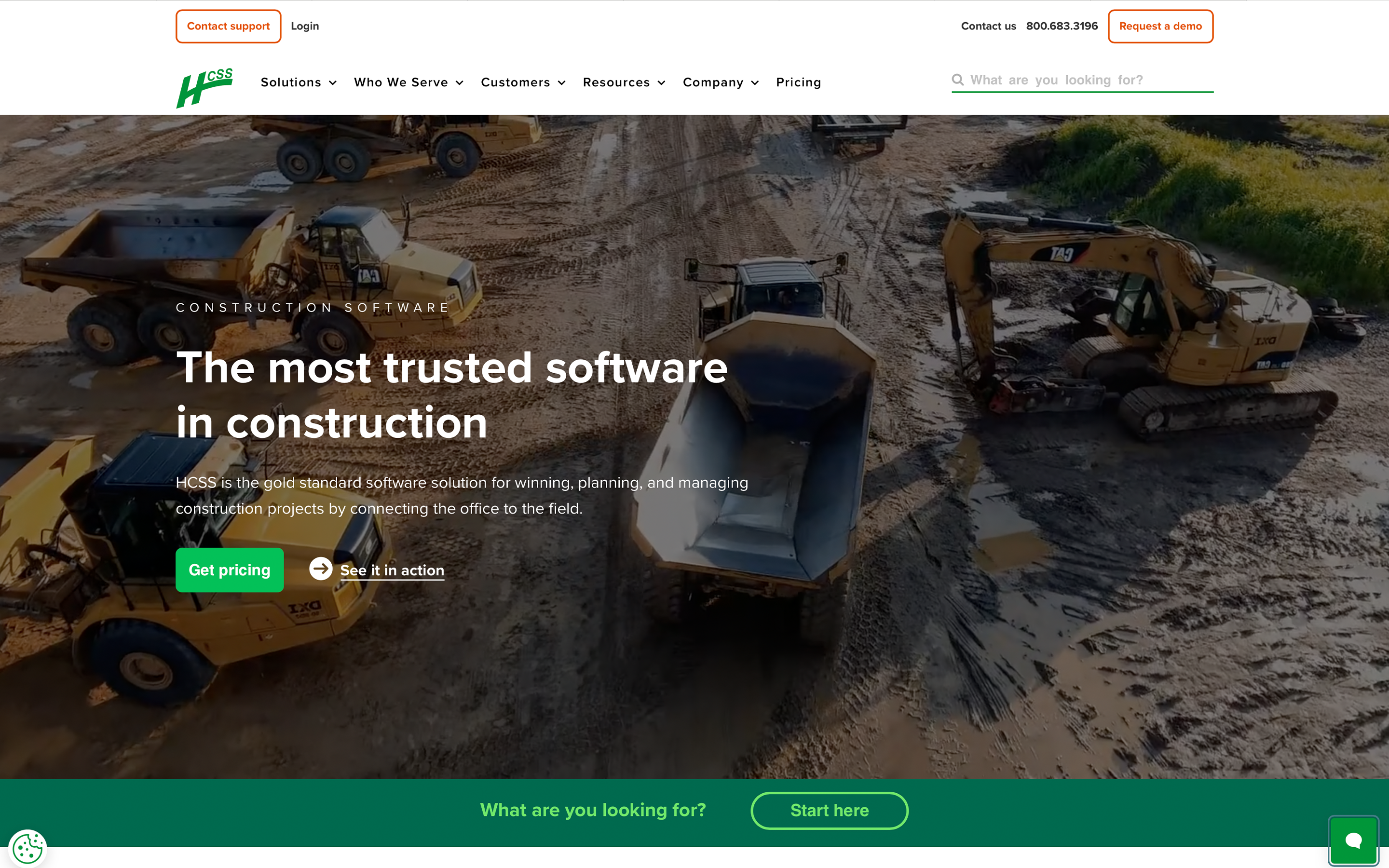
HCSS offers construction-specific software with a maintenance module designed to align with heavy fleet operations and project workflows.
Strengths for Heavy Equipment:
- Construction-focused maintenance workflows
- Preventive maintenance alerts based on runtime hours, date, and odometer
- Work order and service documentation tools
- Integration with broader project and fleet systems
Considerations:
Most powerful when used within the broader HCSS ecosystem, which may require integrations. Standalone deployments may require additional configuration for full context.
Fleetio
Summary:
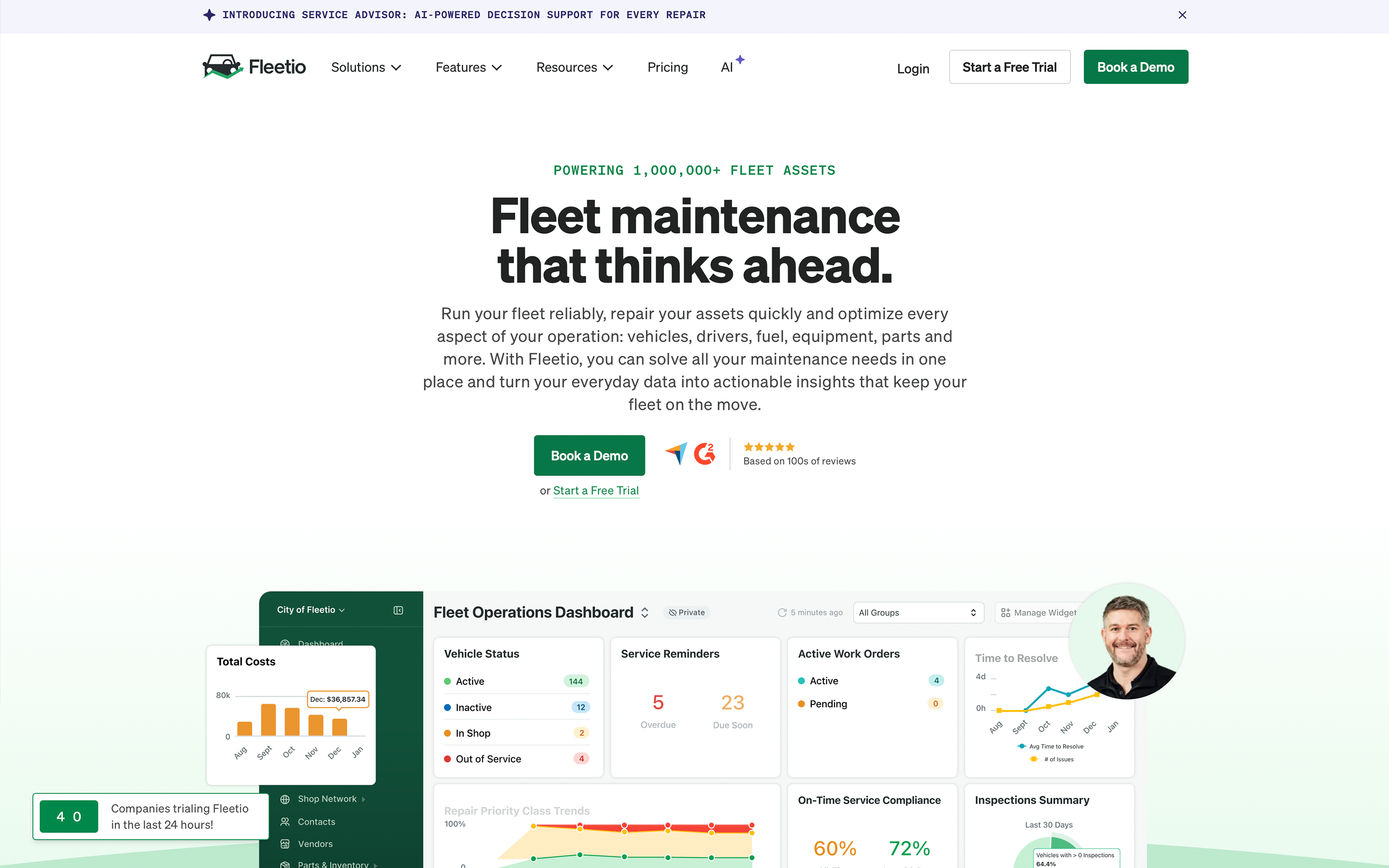
Fleetio provides intuitive maintenance scheduling, inspections, and work order tracking with strong mobile functionality. It is a general fleet platform rather than heavy equipment-native software.
Strengths for Heavy Equipment:
- User-friendly work order and inspection workflows
- Mobile-first maintenance tracking
- Integrated parts inventory with service events
Considerations:
Does not natively capture CAN bus diagnostics without third-party telematics. Limited construction-specific workflows such as jobsite association.
MaintainX
Summary:
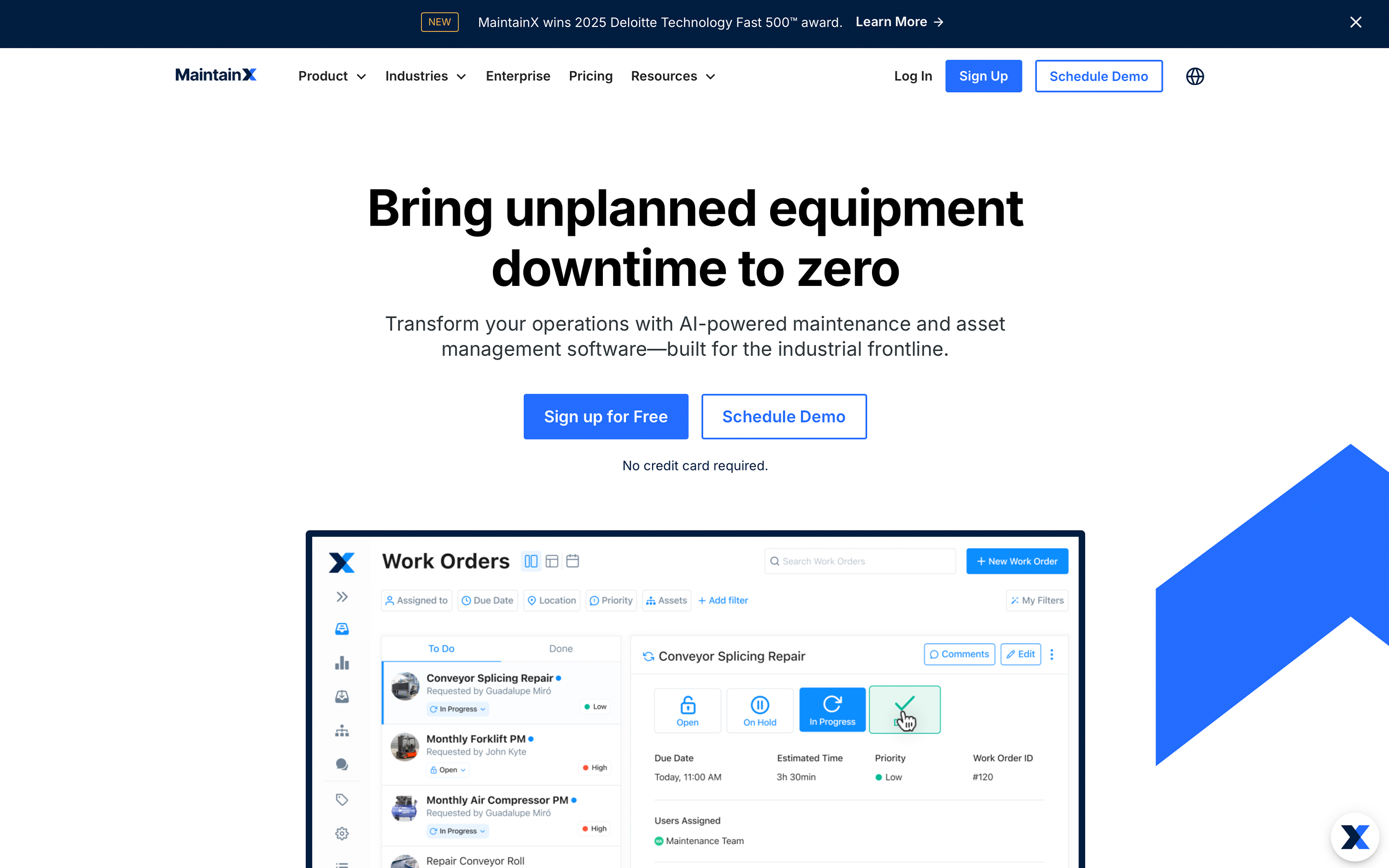
MaintainX is general-purpose maintenance software with strong work order and scheduling functionality. It does not natively include heavy equipment telematics or diagnostics.
Strengths for Heavy Equipment:
- Flexible scheduling and work order tools
- Customizable workflows
Considerations:
No native telematics or machine data. Requires integrations to support heavy equipment diagnostics. Not construction-specific without configuration
What Makes a Heavy Equipment Maintenance System “Top Rated” for Construction?
For contractors, top rated heavy equipment maintenance systems aren’t about brand recognition — they’re about operational impact.
The highest-performing systems typically include:
- Usage-based preventive maintenance
- Support for heavy equipment and on-road fleets
- Integrated telematics and equipment hardware
- Centralized work orders, parts, and labor tracking in one platform
- Construction-specific workflows, reporting, and cost codes
Why Hardware-Integrated Maintenance Systems Rank Higher
Maintenance systems that integrate directly with equipment hardware consistently rank higher because they rely on real usage data — not estimates.
That means:
- Fewer missed services
- Reduced over-maintenance
- Improved uptime
- Better visibility into true maintenance cost
When diagnostics automatically trigger workflows, maintenance becomes proactive instead of reactive.
Conclusion: The Best Heavy Equipment Maintenance Systems Are Built for Construction
Best Choice: Tenna
The top rated heavy equipment maintenance systems are purpose-built for construction fleets. They combine accurate equipment data with preventive maintenance workflows to reduce downtime, protect margins, and extend asset life.
For contractors managing heavy iron across multiple jobsites, choosing a true heavy equipment maintenance system, rather than a generic fleet tracker, can make the difference between smooth operations and costly delays.