
AI dash cams in construction are rapidly becoming standard across construction fleets. According to national construction safety data from organizations like OSHA, the Association of General Contractors (AGC), and Associated Builders and Contractors (ABC), transportation-related incidents remain one of the leading causes of serious injuries and fatalities in construction. Contractors are realizing they can’t afford blind spots anymore.
But here’s what many contractors discover too late: Buying AI dash cams is easy. Integrating them into daily construction operations is the hard part.
This is where the real question emerges — and where many solutions fall short: How are AI dash cams integrated into construction technology systems, and why does a comprehensive safety solution really matter so much? Read on.
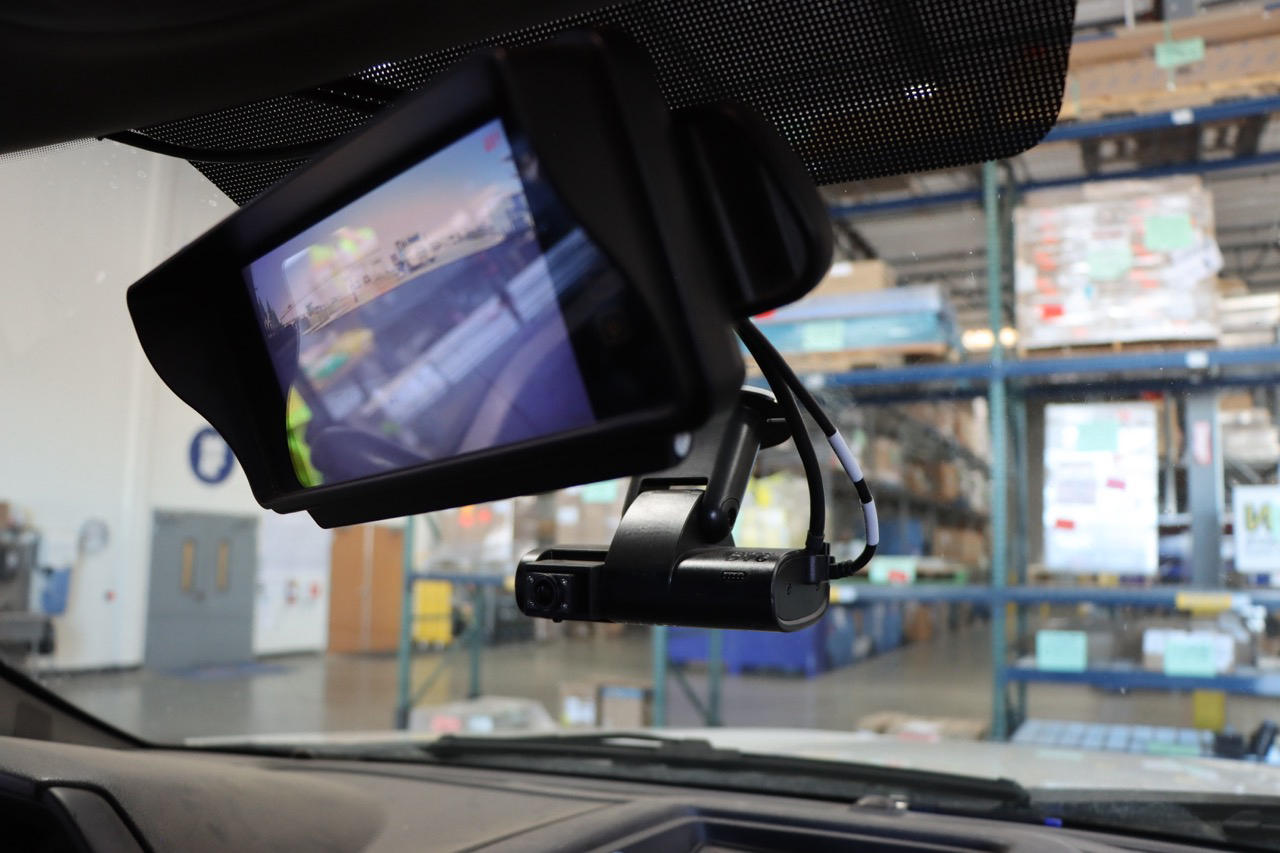
What Are AI Dash Cams in Construction?
Before diving in, it’s important to establish what sets modern AI dash cams apart, especially in construction environments.
AI dash cams use artificial intelligence and machine learning to automatically detect and flag risky driving behaviors and incidents. In on-road fleet cameras, this includes:
- Harsh braking or acceleration
- Tailgating and unsafe following distance
- Distracted driving or phone use
- Lane departures
- Potential collisions or near misses
In heavy equipment cameras, this includes 360-degree views around heavy equipment to spot people and other machines, and real-time in-cab alerts for immediate attention to prevent costly incidents.
Most AI dash cams for construction fleets have forward-facing cameras. Many also offer optional driver/operator-facing cameras for deeper behavior insights.
Common Construction Use Cases
Contractors deploy AI dash cams to support:
- Driver behavior monitoring and coaching
- Safety on jobsites around heavy equipment
- Incident and accident investigation
- DOT and internal compliance documentation
- Risk reduction both on-road and onsite
- Insurance and claims protection
- Additional safety program enforcement
Why Comprehensive Safety Camera Functionality Matters in Construction Environments
Construction fleets are not like standard on-road fleets. They’re complex, dynamic, made up of mixed asset types and constantly changing.
A single contractor may manage:
- Mixed fleets of trucks, trailers, and heavy equipment
- Operators who rotate across machines and job sites
- Assets moving between projects daily
- Overlapping safety, operations, and compliance requirements
When AI dash cams are only on fleet vehicles and not linked to broader construction tech systems, contractors face familiar pain points:
- Safety data lives in a silo.
- Video footage does not connect to assets, drivers, or jobs.
- Jobsites don’t have coverage around heavy equipment.
- Manual exports and duplicate data entry eat up admin time.
- Safety teams lack visibility across projects.
- Operations teams can’t act on safety insights.
The result? An incomplete solution for the realities of the construction industry.
Common Ways AI Dash Cams Are Integrated (and Where They Fall Short)
1. Standalone AI Dash Cam Platforms
This is the most common starting point. Contractors purchase cameras and log into a separate, proprietary platform to review footage and alerts. While these tools may offer basic AI detection, integration is often limited to:
- Generic APIs
- CSV data exports
- Minimal alert syncing
That leaves contractors to:
- Manually connect dash cam data to fleet systems
- Train teams on yet another software platform
- Reconcile video with asset and driver records
The outcome: fragmented workflows, partial visibility across multiple systems, and safety data that never reaches its full potential.
2. Partial Integrations via Third-Party Tools
Some contractors try to close the gap by pairing a dash cam vendor with separate fleet management or compliance software.
While this can improve visibility slightly, these integrations often:
- Sync only surface-level alerts
- Lack construction-specific context (asset type, job site, operator)
- Still require multiple systems and logins
Operational friction remains and adoption suffers.
How AI Dash Cams Are Part of a Construction-First Platform
Here’s where the model changes. In a construction-first technology platform, AI dash cams for on and off-road fleets are a native part of the safety and compliance ecosystem.
Native Hardware + Software
Instead of bolting cameras onto separate systems, natively integrated platforms build AI dash cams into the same environment used for:
- Fleet management
- Equipment tracking
- Equipment maintenance and inspections
- Operator records
- Safety and compliance programs
No third-party handoffs. No data silos. No guesswork.
A Unified Data Model
This marks the real breakthrough in how construction technology systems integrate AI dash cams. AI-detected events are automatically tied to:
- Specific vehicles and equipment
- Assigned drivers or operators
- Jobs, locations, and timelines
- Operator and driver scorecards
This enables construction-specific insights and real accountability that standalone dash cam solutions simply can’t deliver.
Additionally, when a dash camera is paired with a fleet or equipment tracker, this allows for data exchange between systems for real-time, reliable, and robust communication. Tenna’s heavy equipment camera is paired with its CAN bus tracker while its fleet dash cam is paired with its fleet tracker. This method also offers a failsafe to find stolen assets if a camera is ever removed.
Embedded Safety Workflows
Instead of passively reviewing footage, integrated systems turn video into action. AI dash cam events automatically feed:
- Safety dashboards
- Driver and operator scorecards
- Coaching and corrective action workflows
- Incident review and documentation processes
Video becomes contextual—not isolated.
Extending Safety Beyond Trucks: AI Dash Cams for Heavy Equipment
One of the biggest blind spots in construction safety has been heavy equipment operations. Struck-by incidents and blind-spot collisions cause many jobsite injuries and near-misses. Tenna has closed that gap with purpose-built AI camera technology designed specifically for heavy machinery.
With the introduction of its AI-powered heavy equipment camera system, Tenna extends intelligent safety coverage beyond trucks and into the heart of jobsite operations. This camera solution is purpose-built for the realities of heavy equipment environments — complex movement patterns, tight jobsites, rotating operators, and high pedestrian interaction.
Full Fleet Means Full Visibility
When heavy equipment cameras are a part of a contractor’s larger construction management platform, contractors gain:
- Real-time in-cab alerts that help operators avoid incidents before they happen
- 360° visibility that reduces blind spots and struck-by risk
- Event data tied directly to the specific asset, operator, and jobsite
- Unified reporting across trucks and heavy equipment
This is what true full-fleet coverage looks like. Instead of managing separate systems for vehicles and machinery, contractors can monitor safety performance across the entire operation in one place. Operators receive immediate feedback. Safety managers gain contextual insights. Leadership sees measurable risk reduction across projects.
Read more about why contractors need a heavy equipment camera system.
From Reactive Footage to Proactive Prevention
Most heavy equipment incidents are costly — not just financially, but operationally. Downtime, investigations, insurance claims, reputational impact.
By embedding AI camera intelligence directly into the same platform that tracks equipment utilization, operator assignments, and jobsite movement, Tenna transforms video into proactive prevention.
It’s not just about capturing what happened. It’s about helping prevent it. And in an industry where one heavy equipment incident can halt a project, that distinction matters.
Key Safety and Compliance Capabilities Enabled by a Connected Equipment Management System
AI-Driven Driver Scorecards
By combining AI dash cam data with fleet and operational information, contractors can:
- Identify high-risk behavior trends
- Track improvement over time
- Support consistent, objective coaching
This proactive approach aligns with guidance from industry organizations, which emphasize behavior-based safety programs as a best practice.
Faster Incident Investigation
When incidents occur, time matters. Integrated platforms provide immediate access to:
- AI-flagged video footage
- Theft incidents
- Event timelines
- Asset and jobsite context
This speeds investigations, reduces disputes, increases recovery odds and minimizes costly downtime.
Compliance and Documentation Support
With OSHA inspections, DOT requirements, and insurance reviews becoming more rigorous, documentation is critical.
Integrated AI dash cam systems support:
- Centralized safety records
- Easier audits and reporting
- Consistent enforcement of internal safety policies
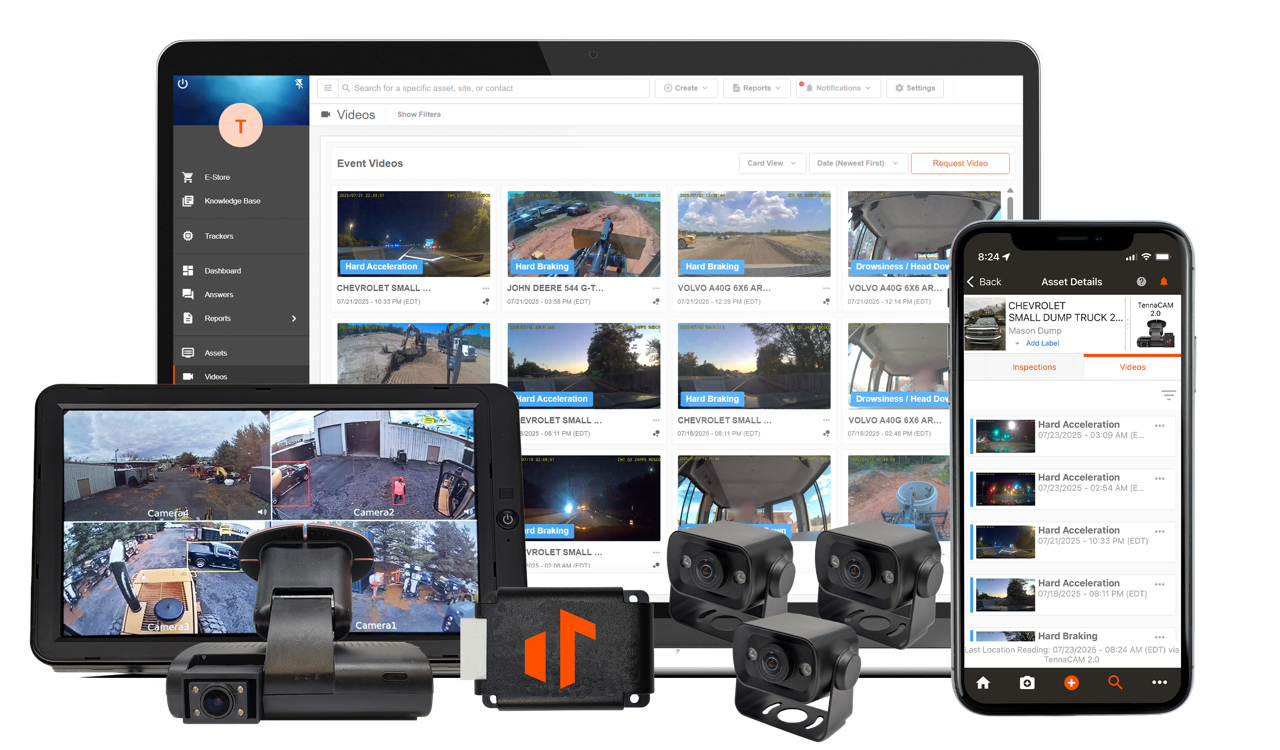
How Tenna Integrates AI Dash Cams into Its Equipment Management Platform
Tenna approaches AI dash cams differently, because construction demands more than generic fleet tools. AI dash cams are part of Tenna’s Safety & Compliance module, fully embedded within its complete equipment management platform.
That means dash cam data is seamlessly integrated with:
- Fleet and equipment records
- Operator and driver scorecards
- Jobsite and location data
- Reporting and analytics
Contractors get one platform for:
- Hardware
- Software
- Safety workflows
Tenna eliminates the need to have multiple systems for all aspects of fleet safety and management, with solutions built by contractors for contractor needs.
What Contractors Should Look for When Evaluating AI Dash Cam Solutions
Before investing, ask these critical questions:
- Is the AI dash cam part of the equipment management solution or a third-party add-on?
- Does safety data connect directly to fleet and equipment records?
- Are driver scorecards, coaching, and reporting built in?
- Can the system scale across mixed fleets and multiple job sites?
- Does the hardware come with just a camera, or a paired tracking device?
- Is the platform designed specifically for construction — not just trucking?
These answers reveal whether a solution delivers insight or just more data.
One Platform Is the Difference Between Data and Real-World Results
Native integration turns video into visibility, insights into action, and technology into measurable safety outcomes. For construction businesses managing mixed fleets, rotating operators, and multiple job sites, disconnected tools create risk, inefficiency, and missed opportunities.
AI dash cams integrated into construction technology systems eliminate those gaps by embedding safety intelligence directly into the workflows contractors already rely on.
Construction-first platforms like Tenna don’t just capture events — they connect them. They link AI-detected risk to the right vehicle, operator, job, and moment. This enables faster decisions, stronger accountability, and safer operations across the organization.
In this industry, one incident can ruin a project or a contractor’s reputation. A complete mixed fleet safety solution is not optional. It’s the foundation of a modern construction safety strategy. If you’re investing in AI dash cams, make sure you’re investing in a system that delivers impact, not just data.